 Nigeria
Debt collection in Nigeria begins with a legal, financial and procedural assessment of the debtor. At this stage, it is important to verify whether the debtor is an individual, a registered company, a public entity or a business structure with assets in Nigeria, whether the debtor has a registered office, head office or active place of business, whether bank accounts, movable property, immovable property, shares, receivables or claims against third parties can be identified, and whether there are pending court cases, existing judgments or ongoing enforcement proceedings.
In cross-border debt collection, the initial review should also establish the connection between the claim and Nigeria. This connection may arise from the debtor’s residence, registered office, principal place of business, assets in Nigeria, performance of the contract in Nigeria, a Nigerian counterparty, a local branch, a payment obligation connected with Nigeria or another basis for using Nigerian court or enforcement procedures.
If the debtor continues business activity, the documents confirm the debt and there are no immediate signs of insolvency, asset dissipation or competing enforcement by other creditors, the creditor may start with an out-of-court recovery stage. The result of the assessment determines whether the case should proceed through negotiations, a small claims procedure, an ordinary court claim, summary judgment, enforcement of an existing judgment, recognition of a foreign judgment or insolvency-related action.
The out-of-court stage may include a written demand for payment, negotiations with the debtor, verification of the authority of the persons acting on behalf of the debtor, discussion of a payment schedule, return of goods, set-off, assignment of debt, provision of security, acknowledgment of debt or another lawful settlement option consistent with the nature of the obligation.
Communication with the debtor should be documented from the first notice. Letters, emails, delivery confirmations, replies, payment proposals, objections, partial payments and documents submitted by the debtor may later become important evidence in court or during enforcement. In a Nigeria-related debt case, this stage is especially useful when it is necessary to fix the amount owed, identify the debtor’s position and preserve proof that payment was demanded before litigation.
The duration of informal recovery depends on the debtor’s response, the quality of the documents, the location of assets, the existence of other creditors, the urgency of enforcement and the possibility of reaching a realistic settlement. If negotiations do not lead to payment, the debtor disputes the debt without sufficient grounds, avoids contact, dissipates assets or the initial review shows that voluntary settlement is unsuitable, it is advisable to proceed to judicial debt collection in Nigeria.
Before initiating judicial collection, the applicable statute of limitations should be determined. In many contractual debt cases based on a simple contract, the limitation period is six years from the date when the cause of action accrued. Where the obligation is contained in a deed or another instrument governed by a longer limitation rule, the period may be longer; for example, in Lagos State, contracts under seal may be subject to a twelve-year period. If a claim is filed after the applicable limitation period has expired, the debtor may rely on limitation as a defense and the claim may be treated as statute-barred.
Nigerian law allows judicial debt collection through different procedural routes. The choice of route depends on the amount of the claim, the nature of the debt, the debtor’s location, the court with jurisdiction, the quality of written evidence, the debtor’s expected defense and whether the claim is suitable for a faster process.
For smaller and clearly quantified monetary claims, a small claims procedure may be available in a state that has adopted such a procedure. In Lagos State, the small claims procedure is designed for simple debt recovery disputes in the Magistrates’ Courts where the claimant or defendant resides or carries on business in Lagos State, or where the cause of action arose wholly or partly in Lagos State. The claim must be a liquidated money demand not exceeding N5,000,000, excluding interest and costs, and the claimant must have served a Letter of Demand before filing.
The small claims process is document-based. The action is commenced by completing the prescribed complaint form, and the summons and relevant forms are served on the defendant. If the claimant believes that the defendant has no defense, an application for summary judgment may be filed with supporting affidavit evidence. The defendant may respond by filing a defense, admission, counterclaim or counter-affidavit within the prescribed time. Where the defendant fails to answer the claim or fails to respond to a summary judgment application, the claim may be treated as admitted.
In the Lagos small claims process, the court encourages settlement at the first appearance, may hold a pre-trial conference, may set a timetable for documents and evidence, and may proceed to summary judgment or hearing where settlement is not reached. The entire period from filing the claim to delivery of judgment is intended not to exceed 60 days, and the appeal process is intended not to exceed 30 days after assignment to the appropriate fast-track appeal route.
The ordinary court procedure applies where the claim is not suitable for a small claims route, where the debt is disputed, where the amount exceeds the relevant monetary threshold, where complex evidence must be examined or where the case must be brought before a High Court or another competent court. Jurisdiction may depend on the state, the debtor’s location, the place where the cause of action arose, the type of defendant, the subject matter of the dispute and the applicable court rules.
In many civil debt claims, proceedings are commenced by a writ of summons. This is the originating process by which the defendant is required to appear and answer the creditor’s claim. The writ is usually supported by the creditor’s statement of claim, which sets out the facts, the amount claimed, the basis of the debt, interest or ancillary claims and the reliefs requested from the court.
In Lagos State, a claim commenced by writ of summons should be prepared with the supporting court processes required by the applicable High Court rules. These may include the statement of claim, list of witnesses, written witness statements on oath, copies of documents to be relied upon, written address where applicable and the pre-action protocol documents required for filing. The debtor, after service, must enter appearance and respond within the time stated by the originating process and the relevant rules.
On the date fixed for appearance or hearing, the parties appear personally or through authorized representatives. If the claim is for a liquidated debt and the defendant has been duly served but fails to appear or fails to respond in the manner required by the applicable procedure, the creditor may seek judgment for the amount claimed, subject to proof of service and the court’s assessment of the documents.
Where the defendant appears but the creditor’s case is supported by clear written evidence and the defendant has no real defense to the claim, the creditor may use summary judgment where the applicable rules allow it. The creditor’s application should be supported by the statement of claim, documentary evidence, witness statements or affidavit evidence, and the motion or application required by the relevant court rules.
If the defendant intends to resist summary judgment, the defendant must place before the court the facts, documents and affidavit evidence showing a genuine defense or triable issue. After considering both sides, the court may enter judgment for the creditor, enter judgment for the undisputed part of the claim, or grant the defendant leave to defend where the dispute requires full trial.
If the matter is defended and the court cannot determine the claim summarily, the case proceeds through pleadings, case management and trial. At this stage, the court may give directions for the exchange of statements of case, witness statements, documentary evidence, expert evidence where necessary and other procedural steps required for the fair determination of the dispute.
The court examines the creditor’s documents, the debtor’s objections, the contractual basis of the debt, delivery or performance evidence, invoices, account statements, correspondence, acknowledgments of debt, interest or penalty clauses, counterclaims and any issue affecting the amount or enforceability of the claim. Where the applicable rules require a party to respond specifically to factual allegations, a general or evasive denial may be insufficient.
After the close of pleadings and presentation of evidence, the court evaluates the facts and the applicable law and delivers judgment. If the creditor succeeds, the judgment may form the basis for enforcement proceedings against the debtor’s attachable assets, subject to any appeal, stay of execution or other order affecting enforcement.
A decision of a Magistrates’ Court or District Court may be appealed to the High Court of the relevant state within the time allowed by the applicable state rules; in many debt-related routes, a 30-day appeal period is relevant. A final decision of a State High Court or the Federal High Court in a civil matter may generally be appealed to the Court of Appeal within three months, while an appeal against an interlocutory decision is subject to a shorter period, commonly fourteen days.
A decision of the Court of Appeal may be appealed to the Supreme Court of Nigeria where the Constitution, the Supreme Court Act and the applicable rules allow an appeal as of right or with leave. For civil appeals to the Supreme Court, the period is fourteen days for an interlocutory decision and three months for a final decision. The decision of the Supreme Court is final and cannot be further appealed.
If the creditor already has a foreign court judgment, recognition and enforcement of foreign judgments in Nigeria is a separate stage before local enforcement against the debtor’s assets. Under the Foreign Judgments (Reciprocal Enforcement) Act, a qualifying foreign money judgment may be registered in a superior court in Nigeria where the statutory conditions are met. The judgment must be final and conclusive, must order payment of a sum of money, and must not be for taxes, charges of a similar nature, a fine or another penalty.
A foreign judgment debtor may apply to set aside registration where the statutory grounds exist, including lack of jurisdiction of the foreign court, insufficient notice of the original proceedings, fraud, public policy in Nigeria, lack of entitlement of the applicant to the judgment or a prior final judgment on the same matter. Once registration stands, the registered judgment has the force of a Nigerian judgment for execution purposes, subject to the period during which an application to set aside registration may be made or determined.
After a Nigerian judgment or a registered foreign judgment becomes enforceable, the creditor may initiate enforcement proceedings. As between the original parties, enforcement process against property may generally issue within six years from the judgment, and after that period leave of court may be required. Enforcement may include garnishee proceedings against debts owed to the judgment debtor, attachment and sale of movable property, execution against immovable property, attachment of securities, shares and other valuable rights, and other measures available under the Sheriffs and Civil Process Act and the applicable judgment enforcement rules.
Garnishee proceedings are often important where the creditor has information about the debtor’s bank accounts or receivables. The court may attach debts owed by a third party to the judgment debtor and direct payment toward the judgment debt. Where the money to be attached is in the custody or control of a public officer or the court, special consent or leave requirements may apply, including consent of the Attorney-General of the Federation or of the State where the funds are held by a public officer in that capacity.
If the debtor’s financial position shows inability to pay debts as they fall due, the creditor may consider insolvency, bankruptcy or liquidation remedies. The correct route depends on the debtor’s legal status. Bankruptcy proceedings are generally connected with individuals, while winding-up and liquidation are corporate procedures used against companies.
For a company debtor, CAMA 2020 provides that a company may be wound up by the court where it is unable to pay its debts. Under the statutory demand route, the creditor serves a written demand at the company’s registered office or head office, requiring payment of the sum due. If the company neglects for three weeks to pay, secure or compound the debt to the reasonable satisfaction of the creditor, this may support the conclusion that the company is unable to pay its debts. CAMA 2020 originally referred to a sum exceeding N200,000, but the Business Facilitation legislation amended this threshold so that the relevant amount is to be determined by regulation issued by the Corporate Affairs Commission.
For an individual debtor, bankruptcy may become relevant where the debt is payable immediately or at a certain future date and the debtor has committed an act of bankruptcy within the relevant period. Acts of bankruptcy may include failure to comply with a bankruptcy notice within fourteen days after service where a final judgment exists and execution has not been stayed, seizure of the debtor’s property where the property has been sold or retained by the bailiff for twenty-one days, the debtor’s declaration to the court that he is unable to pay his debts, the debtor’s own bankruptcy petition, suspension of payment or notice of intention to suspend payment, leaving Nigeria, remaining outside Nigeria or otherwise absconding in circumstances relevant to bankruptcy.
For the creditor, insolvency-related action is not only a method of pressure on a non-paying debtor. It is a separate legal route that may affect all creditors, the debtor’s assets, the order of payment, existing enforcement actions and transactions made before the opening of the procedure. This route is most relevant where ordinary enforcement is unlikely to produce payment, the debtor’s assets are insufficient, several creditors compete for the same assets or the debtor has transferred assets shortly before insolvency.
Where the debtor’s assets are insufficient to satisfy creditors, insolvency law may allow certain transactions to be challenged so that value improperly removed from the debtor’s estate can be restored. In company insolvency, the relevant issues may include fraudulent preference, transactions at an undervalue, transactions with connected persons, security granted shortly before insolvency and other dealings that reduce the assets available for creditors.
A transaction at an undervalue may be relevant where the company made a gift, entered into a transaction for no consideration or received consideration significantly lower than the value provided by the company. Under CAMA 2020, the transaction-at-undervalue framework is connected with a two-year period ending with the onset of insolvency, subject to the statutory conditions. Transactions with connected persons may attract particular scrutiny.
Fraudulent preference may arise where a company does something that places a creditor, surety or guarantor in a better position than that person would have been in on insolvency distribution, and the statutory conditions are met. The Business Facilitation amendments also affected the relevant time analysis for fraudulent preference by introducing a two-year period ending with the onset of insolvency for certain connected-person preference situations.
The legal effect of a successful challenge may include restoration of property, repayment of value, loss of priority, reversal of the benefit received or other orders that increase the assets available for distribution. Where the conduct of directors, managers, shareholders or connected persons contributed to the insufficiency of assets, misapplied company property, preferred selected creditors or continued harmful conduct after insolvency became apparent, their conduct may become relevant within the applicable corporate insolvency framework.
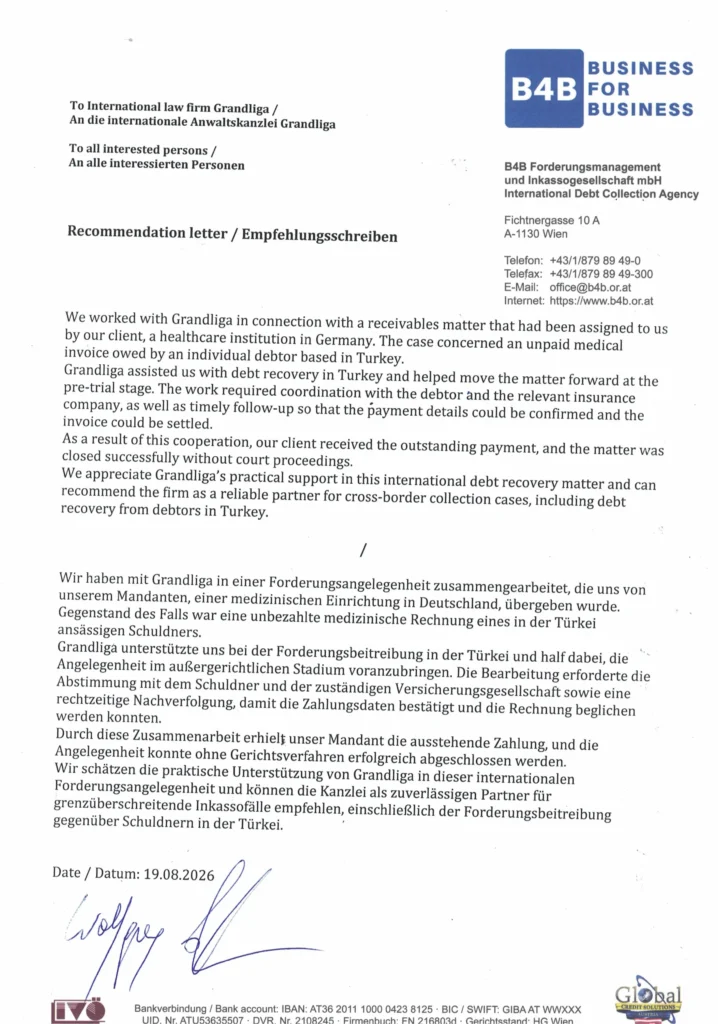
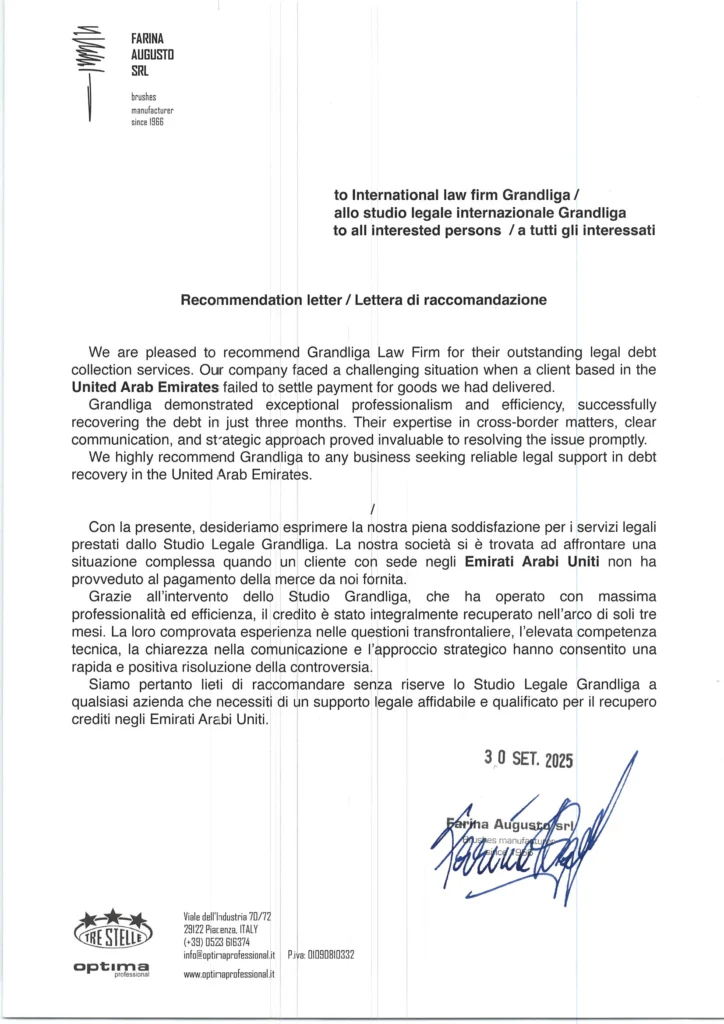
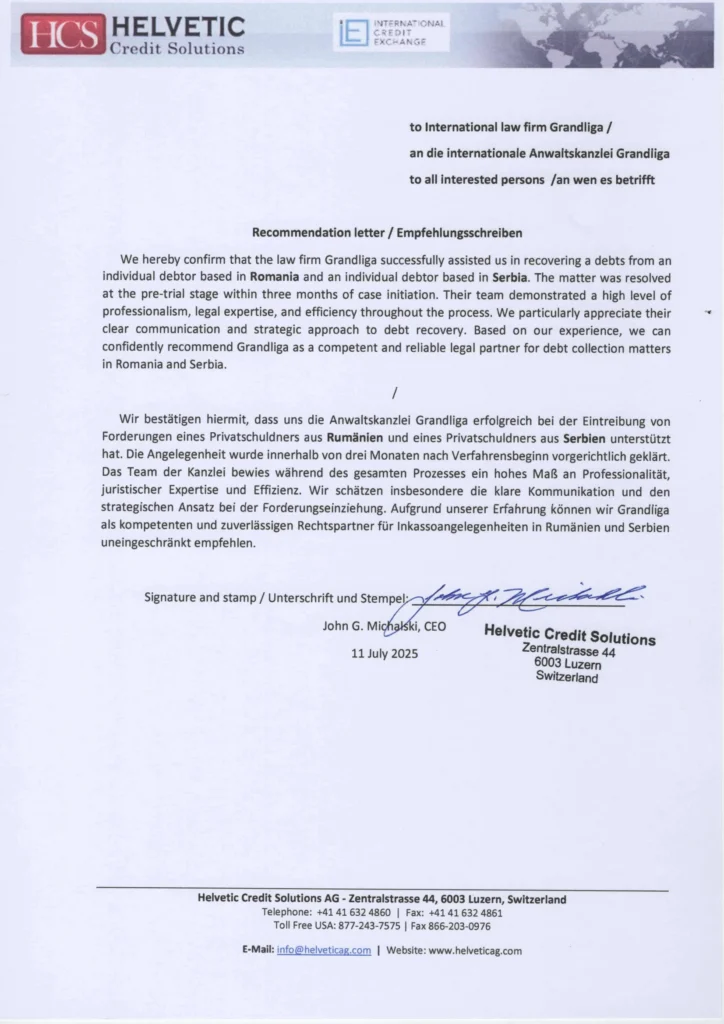
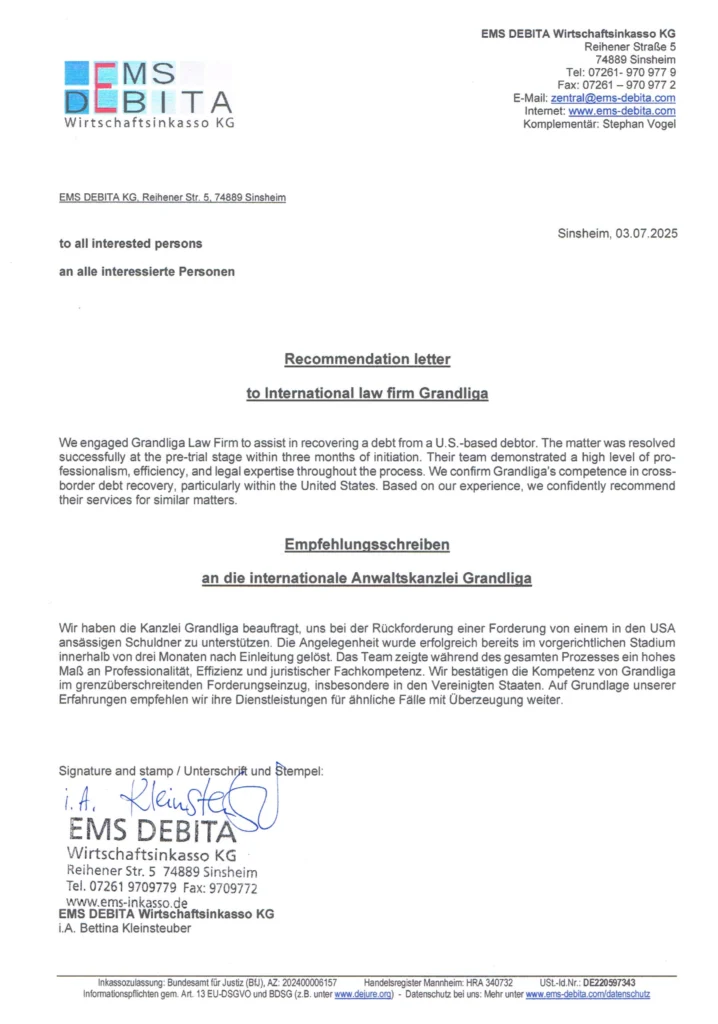
If your case involves debt collection in Nigeria, Grandliga can assist at every key stage of the recovery process: reviewing the debtor and supporting documents, preparing a demand strategy, conducting negotiations, assessing limitation issues, choosing the appropriate court route, preparing a small claims or ordinary court case, applying for summary judgment where available, registering a foreign judgment, enforcing against identified assets and considering insolvency-related measures where they are commercially justified. The work is focused on a practical recovery strategy that reflects the debtor’s legal status, the Nigerian connection of the claim and the assets that may realistically be used for enforcement.