Let's discuss your case
We will analyze and give recommendations
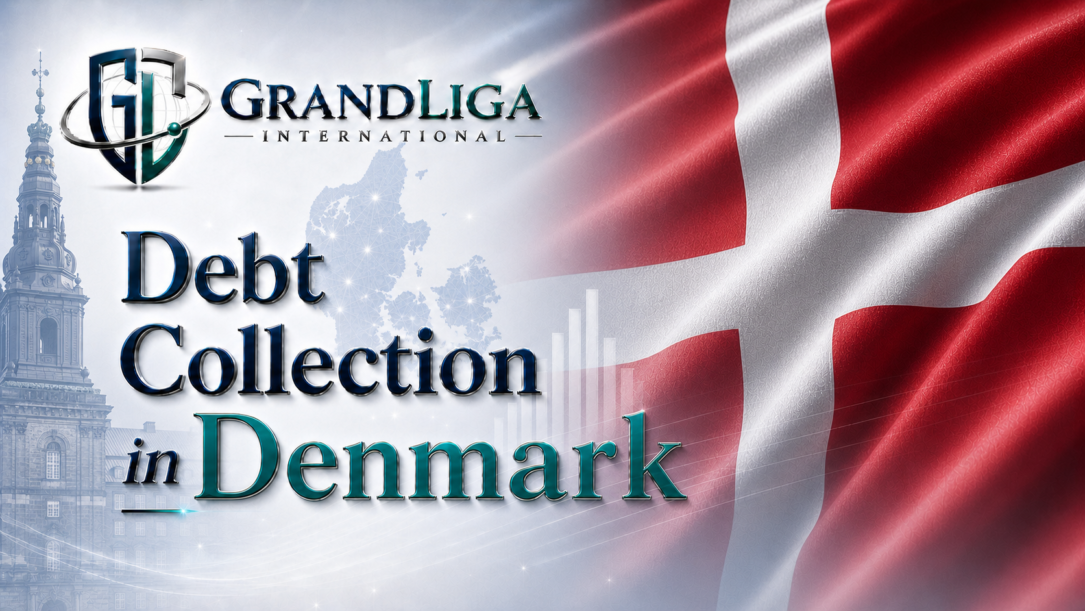
Debt collection in Denmark should start with a legal and financial assessment of the debtor, not only with a general solvency check. For a Danish company, this assessment should include verification of the correct legal name, CVR number, registered address, business activity, current company status, available assets, possible enforcement matters, insolvency indicators and the risk that the debtor may dispute the claim.
At this stage, the creditor should also review the legal basis of the debt: the contract, invoices, delivery documents, acceptance acts, correspondence, payment history, due date and any written acknowledgement of the obligation. This helps determine whether the case should begin with amicable recovery, a statutory demand letter, a payment order, ordinary court proceedings, the simplified procedure, enforcement before the bailiff court or insolvency-related measures.
The debt collection procedure is regulated by the Danish Debt Collection Act. Professional debt collection carried out on behalf of others normally requires authorisation, and a business operating as a debt collection agency must obtain authorisation from the Danish police. Employees who personally contact debtors as part of authorised debt collection activity may also require approval. These authorisation rules do not apply in the same way to debt collection activities carried out by lawyers as part of independent legal services.
As part of the Danish debt collection procedure, the debtor should receive a written demand letter before further collection measures are taken. The demand letter should clearly identify the claim and contain the information necessary for the debtor to assess the debt. It must also give the debtor a payment period of at least 10 days from the date of dispatch, during which the debtor may pay without additional collection measures that would increase the debtor’s costs. Without such prior notice, personal contact with the debtor for collection purposes is prohibited under the Danish debt collection rules.
Court proceedings should also normally not be initiated before the debtor has received the required demand letter and the payment period has expired. The exception applies where compliance with this requirement would create an imminent risk that the claim could otherwise not be recovered.
If the debtor does not pay after the demand letter and the case cannot be resolved amicably, the creditor should move to the stage of judicial debt collection. The appropriate procedure depends on the amount of the claim, whether the debt is disputed, the quality of the evidence and whether the creditor expects objections from the debtor.
Before initiating legal action, the creditor should assess the applicable limitation period. The general limitation period for debt collection in Denmark is 3 years. A 10-year limitation period may apply to certain stronger bases of claim, including a debt instrument, a written acknowledgement of debt, a settlement, a judgment, a payment order endorsed with enforceable effect or another binding decision. Danish limitation rules do not allow the parties simply to extend these statutory periods by agreement before limitation occurs. If the limitation period expires, the creditor may lose the legal possibility to enforce the claim.
The limitation period may be interrupted if the debtor expressly or impliedly acknowledges the obligation, for example by payment, written recognition of the debt or other conduct showing acceptance of liability. It may also be interrupted by appropriate legal steps. After interruption, a new limitation period begins to run.
Danish law provides for several forms of judicial debt collection: ordinary civil proceedings, the simplified procedure for lower-value cases, the national payment order procedure and subsequent enforcement before the bailiff court.
Ordinary civil proceedings are initiated digitally through the Danish court case portal by filing a writ of summons. After the court accepts the claim for consideration, the summons is served on the defendant and the defendant is given a deadline to respond, which usually must be at least 2 weeks. This route is usually relevant where the claim is disputed, exceeds the payment order framework, requires broader evidence or cannot be handled effectively through the simplified procedure.
If the defendant does not provide an answer within the allotted time, or his answer does not meet procedural requirements, then the court makes a decision based on the position of the plaintiff. If the defendant provides an answer, the case is subject to consideration at a preparatory or main hearing.
The main hearing is usually conducted orally, with the parties’ positions heard. After the end of negotiations between the parties, the court proceeds to consider the case and makes a decision, which becomes final after the expiration of the period for appealing it.
*The parties may, after a dispute arises, agree that the decision on the merits of the case is not subject to appeal. In cases between entrepreneurs on issues relating to the business activities of the parties, such an agreement may be concluded before a dispute arises.
The decision of the court of first instance can be appealed to the court of appeal within 4 weeks from the announcement of the decision. If the case concerns a claim with an economic value not exceeding DKK 50,000, the decision can generally be appealed only with permission from the Appeals Permission Board. Permission may be granted where the case is of fundamental importance or where other special reasons support an appeal. The application for permission should be submitted within 4 weeks from the date of the decision.
In exceptional cases, permission to appeal may also be granted on the basis of an application submitted later, but no later than within 1 year from the date of the decision.
An appeal is filed with the court whose decision is being appealed. The court whose decision is appealed sends the case materials to the appeal court within 1 week after receiving the appeal. The appeal must be filed before the expiry of the appeal period or, where permission to appeal has been granted separately, within 4 weeks after the applicant has been notified that permission was granted. The other party has the right to respond to the appeal within two weeks.
Typically, the appeal will be heard in the form of an oral substantive hearing, unless the parties object to the exchange of written documents or the court determines that an oral hearing is not appropriate. After considering the appeal, the appellate court makes a decision, which comes into effect from the moment it is announced.
The decision of the Court of Appeal can be appealed to the Supreme Court of Denmark within 4 weeks from the announcement of the decision, subject to permission to appeal from the Supreme Court. The Supreme Court has the right, at the request of an interested party, to suspend the effect of the appealed decision, subject to the provision of adequate security by the applicant. As a result of considering the complaint, the Supreme Court makes a decision that is not subject to further appeal and comes into force from the moment of its announcement.
The simplified procedure, known in Denmark as den forenklede proces, is applicable to ordinary district court cases with no economic value or with an economic value not exceeding DKK 100,000. For housing court cases, the threshold remains DKK 50,000. The parties may also agree to use this procedure after the dispute has arisen, and in business-to-business matters relating to the parties’ commercial activities, such an agreement may be made before the dispute arises. The case follows the general court logic, but with procedural simplifications.
The payment order procedure is a simplified national debt collection procedure for overdue monetary claims not exceeding DKK 100,000, excluding interest and costs. It is suitable where the creditor has a clear expectation that the debtor will not dispute the debt or raise a counterclaim. The demand for payment is submitted to the bailiff court, which is part of the district court.
Before submitting a demand for payment to the court, the debtor must be sent a demand letter that complies with the Danish debt collection rules, and the payment period specified in that letter must have expired. When calculating the amount claimed, the creditor should separate the principal debt, contractual penalties, interest and recoverable costs. Default interest after the due date is generally based on the statutory reference rate plus 8 percentage points. Court fees should also be considered before choosing the procedure: the Danish Courts list DKK 750 for filing a payment order and DKK 750 for filing a bailiff court request, while ordinary civil cases and insolvency-related applications may involve different fees.
The bailiff court serves the payment order on the debtor. The debtor has 14 days to submit objections; if the debtor is abroad, in the Faroe Islands or in Greenland, the period is 4 weeks. If the debtor does not object in time, the payment order may acquire the force of a court decision. If the debtor objects in time, the case may continue as court proceedings if the creditor has requested this. If the creditor has not requested continuation as court proceedings, the payment order procedure does not automatically move forward as an ordinary court case.
For international creditors, it is important to distinguish Danish domestic collection tools from cross-border enforcement of an already existing judgment. Judgments from EU Member States in civil and commercial matters are generally recognised and enforced in Denmark under the Brussels I Recast framework as applied to Denmark through the 2005 EU-Denmark agreement. At the same time, Denmark is not covered by the European Payment Order and European Small Claims Procedure in the same way as other EU Member States, so a creditor should not rely on those instruments when the debtor or enforcement target is in Denmark. In such cases, the practical route usually depends on whether the creditor already has an enforceable foreign judgment, whether Danish courts have jurisdiction, and where the debtor’s assets are located.
After obtaining a final judgment, an endorsed payment order or another enforceable title, the creditor may initiate enforcement before the bailiff court. A claim established by a judgment or enforceable payment order is generally subject to a 10-year limitation period. In practice, the creditor should be ready to identify the debtor’s assets, bank accounts, receivables, registered property, shares, business income or other attachable assets.
As part of compulsory enforcement, the creditor’s claim may be satisfied through attachment of the debtor’s funds, movable and immovable property, shares, receivables or income from business activity, followed where necessary by sale of attached assets. Certain assets necessary for the debtor’s modest living, work, business or education may be protected from attachment. If the debtor has no attachable assets, the debtor may provide an insolvency declaration to the bailiff court; this may create a practical protection period during which the debtor will generally not be summoned again for the same debt for 12 months.
If the debtor shows signs of insolvency, the creditor should consider whether bankruptcy, restructuring-related measures or ordinary enforcement is the more effective route. A debtor is insolvent if the debtor is unable to fulfil obligations as they fall due, unless the inability to pay is only temporary. In practice, insolvency may be indicated by stopped payments, unsuccessful enforcement attempts, lack of attachable assets, repeated unpaid debts, or circumstances showing that the debtor cannot meet mature obligations in the ordinary course of business.
Bankruptcy should not be treated as an automatic substitute for ordinary debt collection. If the debtor merely disputes the amount, quality of goods or services, contractual performance or the legal basis of the claim, the case may be more appropriate for a payment order, ordinary civil proceedings, the simplified procedure or enforcement before the bailiff court. Bankruptcy becomes more relevant where the main issue is not only the existence of the debt, but the debtor’s inability to pay and the need to preserve or collect assets for the benefit of creditors.
For companies, bankruptcy proceedings are handled by the bankruptcy court. Once bankruptcy proceedings are opened, the debtor loses control over its assets, and a court-appointed trustee or liquidator administers the bankruptcy estate. The trustee examines the debtor’s assets and liabilities, collects receivables, sells assets, reviews creditor claims, investigates suspicious pre-bankruptcy transactions and distributes the estate according to the statutory order of priority.
Creditors must submit and document their claims within the time limit set in the bankruptcy proceedings. In Danish corporate insolvency practice, creditors are generally required to prove their claims within 4 weeks after publication of the bankruptcy order in the Danish Official Gazette. For a creditor, this makes it important to prepare the claim basis in advance: contracts, invoices, delivery documents, correspondence, acknowledgements of debt, enforcement documents and evidence of the due date.
Bankruptcy may also be useful where the debtor transferred assets, preferred related parties, made unusual payments, increased debt, concealed assets or entered into transactions that reduced the estate before insolvency. Danish bankruptcy rules allow certain pre-insolvency transactions to be challenged through avoidance or clawback actions. If such an action is successful, the recipient may have to return the benefit received or compensate the bankruptcy estate, which can increase the funds available for creditor satisfaction.
As a general rule, legal proceedings to challenge avoidable transactions must be initiated within 12 months after the bankruptcy order. This makes timing important: if there are indications that assets were transferred before bankruptcy, the creditor should collect and preserve evidence as early as possible, including payment records, ownership changes, related-party transactions, asset transfers, unusual settlements and transactions made shortly before the debtor became insolvent.
Bankruptcy proceedings may also reveal misconduct by the debtor’s management. If management continued business in a way that caused additional losses to creditors, participated in grossly irresponsible business conduct, breached key bookkeeping or tax obligations, used strawman structures, or entered into non-commercial transactions that reduced the debtor’s asset base, the trustee may assess whether management liability or bankruptcy disqualification should be pursued. Bankruptcy disqualification may prevent the person from participating in the management of a limited liability business for up to 3 years.
If a person subject to bankruptcy disqualification participates in management despite the restriction, this may create additional legal consequences and possible liability. For creditors, this aspect is important because bankruptcy is not only a liquidation procedure; it can also be a tool to investigate the debtor’s conduct, challenge harmful transactions, identify responsible persons and increase the bankruptcy estate available for distribution.
If you need legal support with debt collection in Denmark, Grandliga can assist at all key stages of the process: debtor and asset assessment, limitation analysis, preparation of a compliant demand letter, selection between amicable recovery, payment order, simplified procedure or ordinary proceedings, enforcement before the bailiff court, recognition and enforcement of foreign judgments, and bankruptcy or restructuring-related strategy. The appropriate route should be chosen after reviewing the debtor’s status, documents, jurisdiction, available assets and the likelihood of objections.
# DEBT COLLECTION AGENCY DENMARK
 1262
1262

We will analyze and give recommendations