Let's discuss your case
We will analyze and give recommendations

Debt collection in Iran should begin with a legal, financial and practical assessment of the debtor. For an international creditor, this assessment should cover the debtor’s exact legal identity, business activity in Iran, available assets, pending court cases, existing enforcement proceedings, possible bankruptcy indicators, contractual documents, invoices, delivery records, correspondence, acknowledgements of debt and the debtor’s likely objections to the claim.
In Iran-related recovery matters, the creditor should also assess how the debt can be paid in practice. The strategy may depend not only on the court route, but also on the debtor’s banking relationships, the currency of the obligation, the location of attachable assets, the involvement of sanctioned persons or entities, and the possibility of using a lawful payment channel after settlement, judgment or enforcement.
If the debtor continues to operate commercially and there is no immediate need to secure assets or start court proceedings, the creditor may use the out-of-court stage. This stage may include a formal demand for payment, verification of the outstanding amount, discussion of a repayment schedule, return of goods, set-off, transfer of the debt to a third party, or another settlement mechanism that can be documented and later used as evidence if litigation becomes necessary.
Communication with the debtor may be carried out by mail, email, phone, messengers or other channels used by the parties, but each material contact should be preserved. In an Iranian debt recovery case, the creditor’s practical objective at this stage is to identify the person who can make a payment decision, obtain a clear written position from the debtor, preserve evidence of the claim and determine whether voluntary payment is realistic.
If the debtor ignores the demand, disputes the debt without sufficient grounds, refuses to provide a workable settlement proposal, moves assets, or if the initial review shows that out-of-court recovery is unsuitable, the creditor should proceed to judicial debt collection or another legally available recovery route.
Before initiating judicial collection, the creditor should determine whether the claim falls under a general civil debt claim or under a statutory exception with a special time limit. As a general rule, Iranian civil law does not apply one universal statute of limitations to ordinary civil debt claims. However, specific categories of claims are subject to special limitation rules.
Article 318 of the Iranian Commercial Code provides a five-year limitation period for claims relating to bills of exchange, promissory notes and cheques issued by merchants or for commercial purposes. The period is calculated from the date of the protest or the last judicial action, and if no protest was made, from the expiry of the protest period. If the debtor formally acknowledges the debt within this period, the limitation period starts again from the date of acknowledgement. Article 36 of the Iranian Insurance Law provides a two-year period for claims arising from insurance contracts, calculated from the event giving rise to the claim.
Iranian law provides for judicial debt collection through the ordinary court procedure. This route is used where the debt cannot be recovered through settlement, where the debtor disputes the claim, or where the creditor needs a court judgment that can later be enforced against assets in Iran.
The ordinary court procedure is carried out by filing a statement of claim with the competent court. After receiving the claim, the court checks whether it complies with procedural requirements. If the claim is accepted, the court registers it and issues a receipt to the plaintiff with the details of the parties, the filing date and the case registration number.
After registration, the court sets a hearing date and sends the defendant a notice together with copies of the procedural documents. At the hearing, the creditor should be ready to present the original documents attached to the claim, including the contract, invoices, delivery documents, correspondence, acknowledgements of debt, payment records, guarantees or other evidence supporting the claim. The defendant must also provide the originals and copies of the documents on which it relies.
The defendant’s absence does not necessarily prevent the court from continuing the proceedings. If the defendant, its lawyer or legal representative did not attend the hearings, did not submit a written defence, or if the notification was not duly delivered, the judgment may be treated as a judgment in absentia under Iranian procedural rules. A defendant against whom such a judgment is issued may seek review within the legally defined period.
In international contracts with an Iranian counterparty, the creditor should also examine the dispute resolution clause. A clause choosing a foreign court may be important for the parties’ contractual strategy, but Iranian courts may still accept jurisdiction in certain cases if a claim is filed before a competent Iranian court. Arbitration clauses require separate attention, especially in contracts between Iranian and foreign parties, because Iranian procedural law contains specific rules on arbitration agreements involving foreign nationals.
If the creditor is a foreign national or a foreign company acting as plaintiff in Iran, the Iranian defendant may ask the court to require the plaintiff to provide security for legal costs and potential attorney-fee related damages. This request must be submitted before the end of the first hearing session. The court determines the amount of security and the period for providing it, and the proceedings are suspended until the required security is provided.
A foreign creditor may be exempt from this requirement in specific cases. The exemptions include situations where Iranian nationals are exempt from equivalent security in the creditor’s country, claims relating to promissory notes, bills of exchange and checks, counterclaims, claims based on official documents, and cases initiated through official announcements such as certain registration objections or claims against bankrupt persons.
During the court hearing, the court evaluates the evidence submitted by the parties, their arguments, the disputed legal issues and the grounds stated in their procedural documents. After the court declares the proceedings completed, it may issue the ruling during the same session. If this is not possible, the ruling must be issued within one week, and the written decision must then be prepared and signed according to the procedural rules.
A decision of the court of first instance may be subject to appeal where the law allows it. In financial disputes, appeal is available where the claim or its value exceeds 3,000,000 Iranian rials. The appeal period is 20 days for persons residing in Iran and two months for persons residing abroad, calculated from notification of the judgment or from the expiry of the period for review of a judgment in absentia.
Review by the Supreme Court of Iran is a cassation-style review focused on conformity with Islamic principles and legal regulations. For monetary claims, the 20,000,000 Iranian rial threshold is connected with judgments of trial courts that became final because no appeal was filed. The time limit for filing a cassation appeal is 20 days for persons residing in Iran and two months for persons residing abroad. For appealable decisions of the provincial appellate court, this period starts from notification. For trial court judgments that were not appealed, it starts from the expiry of the ordinary appeal period. Judgments issued by the Court of Appeal are generally final, except for categories expressly provided by law.
For international creditors, recognition and enforcement of foreign court judgments in Iran is a separate recovery route. This route is relevant where the creditor already has a civil judgment issued abroad and the debtor, its assets or enforceable rights are located in Iran. In such a case, the creditor should assess whether the foreign judgment can be used in Iran instead of starting a new claim on the merits.
A foreign civil judgment may be enforced in Iran if the statutory conditions are satisfied. These conditions include reciprocity or an applicable treaty basis, compatibility with Iranian public order and morality, absence of conflict with Iranian international obligations and special laws, finality and enforceability of the judgment in the country of origin, absence of a conflicting Iranian judgment, absence of exclusive Iranian jurisdiction over the subject matter, and the existence of an enforcement order from the competent authority of the country where the judgment was issued.
The application for enforcement is submitted to the court of the place where the judgment debtor resides or is domiciled in Iran. If the debtor’s residence or domicile in Iran is not known, the application is submitted to the court in Tehran. If a treaty between Iran and the country of origin of the judgment provides a specific procedure or conditions, that treaty route applies.
The application should be accompanied by a certified copy of the foreign judgment, an official Persian translation, a certified copy of the foreign enforcement order with translation, and consular or diplomatic confirmations required for the issuance and enforceability of the judgment. If the court accepts the application, it issues an order recognizing the judgment as enforceable and directs enforcement under Iranian civil enforcement rules.
After the court decision becomes final and enforceable, the creditor should initiate enforcement proceedings. Under Iranian civil enforcement rules, a judgment is enforced after the enforceable decision has been notified and the creditor requests enforcement in writing. Enforcement is normally carried out on the basis of a writ of execution.
If the debtor does not voluntarily comply with the judgment, the creditor may request seizure of the debtor’s assets. Enforcement may target funds and receivables, movable property, immovable property, securities, company shares and other attachable rights. The seizure should correspond to the amount awarded by the judgment together with enforcement costs, and assets may be sold where this is necessary to satisfy the creditor’s claim.
For effective enforcement in Iran, asset information is critical. Before or immediately after obtaining an enforceable title, the creditor should identify whether the debtor has bankable receivables, registered property, business interests, movable assets, shares or other assets that can be reached through the enforcement office. If more than five years pass after issuance of the enforcement writ and the creditor does not pursue enforcement operations, the writ may become ineffective and the creditor may need to request a new writ.
An alternative debt recovery route may be the bankruptcy of the debtor. Under the Iranian Commercial Code, bankruptcy applies to a trader or a commercial company that has stopped paying debts that it is obliged to pay. Bankruptcy may be declared by the court at the request of the debtor, one or more creditors, or the prosecutor.
After a bankruptcy judgment is issued, the bankrupt trader is restricted from dealing with its assets, and the liquidation manager acts in relation to the debtor’s financial rights and powers where they are relevant to payment of debts. From that stage, claims and enforcement actions connected with the bankrupt estate should be directed against or through the liquidation manager.
Bankruptcy may be useful for a creditor where ordinary enforcement does not lead to recovery and the debtor’s conduct indicates loss, concealment or transfer of assets. After the date of cessation of payments, the following transactions are void and ineffective: gratuitous transfers or donations of movable or immovable property, payment of debts whether due or not yet due, and transactions that encumber the debtor’s movable or immovable property to the detriment of creditors.
Transactions made before the date of cessation of payments may also be challenged if they were concluded to evade payment of debts or harm creditors and caused damage exceeding one quarter of the value at the time of the transaction. Such a challenge must be brought within the period provided by law. If the court orders rescission, the property must be returned to the liquidation manager, or the relevant value difference must be paid where the property itself cannot be returned.
If a transaction is proven to be sham or collusive, the transaction is void, the property and its benefits are returned, and the counterparty may participate in the bankruptcy only as a creditor where the law allows it. These mechanisms can increase the estate available for creditors and may improve the prospects of recovery where the debtor transferred assets before or during financial distress.
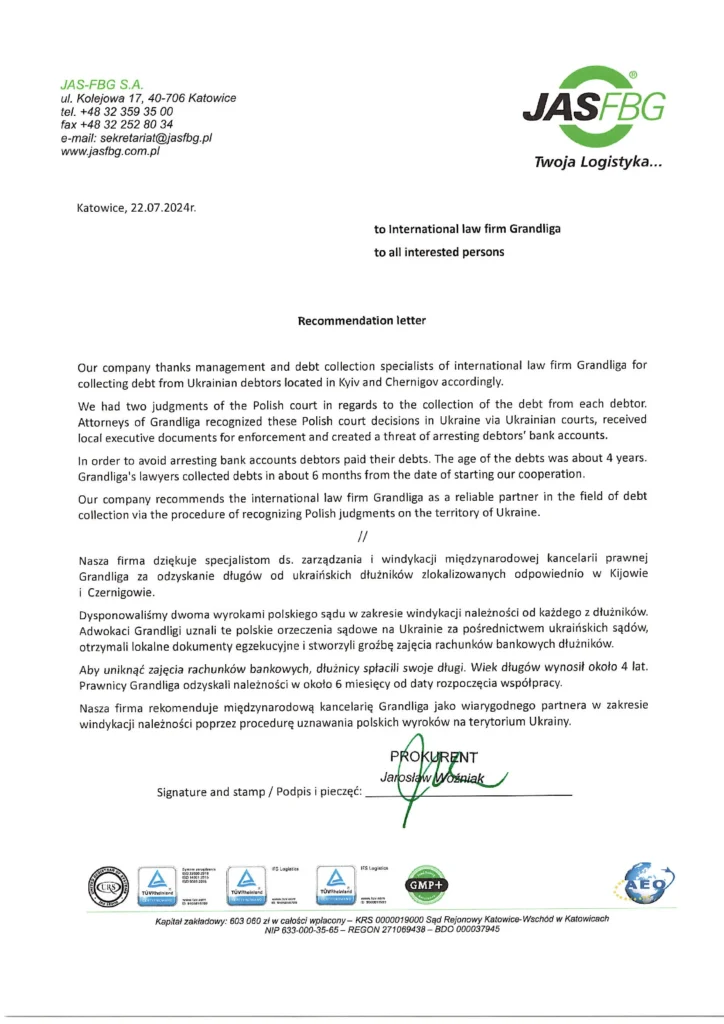
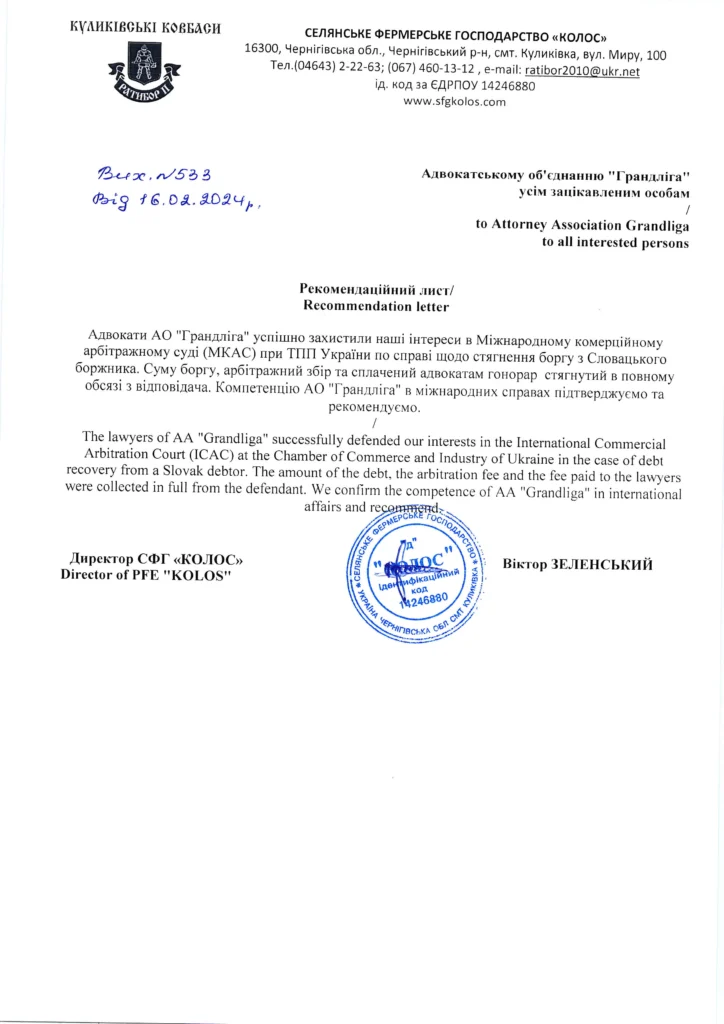
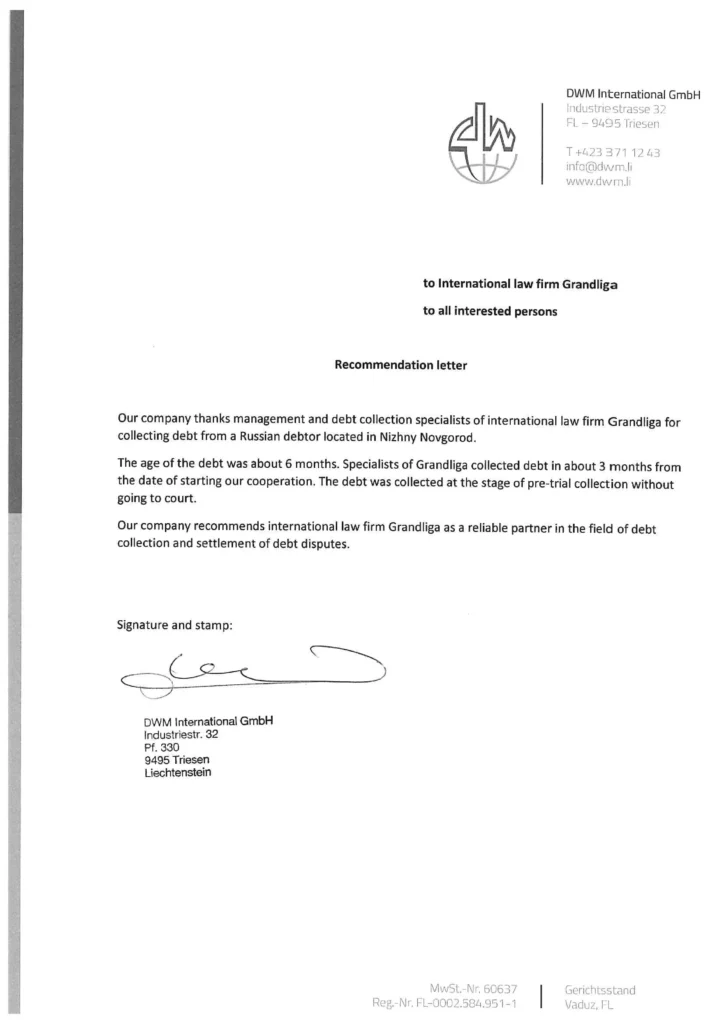
If you need support with debt collection in Iran, Grandliga can assist at the key stages of the recovery process: assessment of the debtor and documents, preparation of a formal demand, out-of-court negotiations, selection of the court strategy, claims before Iranian courts, recognition and enforcement of foreign court judgments, enforcement proceedings, asset-related recovery measures and bankruptcy-related actions. The recovery strategy should be based on the documents, the debtor’s status, available assets, sanctions and payment risks, and the procedural route that gives the creditor the strongest practical position.
# DEBT COLLECTION AGENCY IRAN
 1388
1388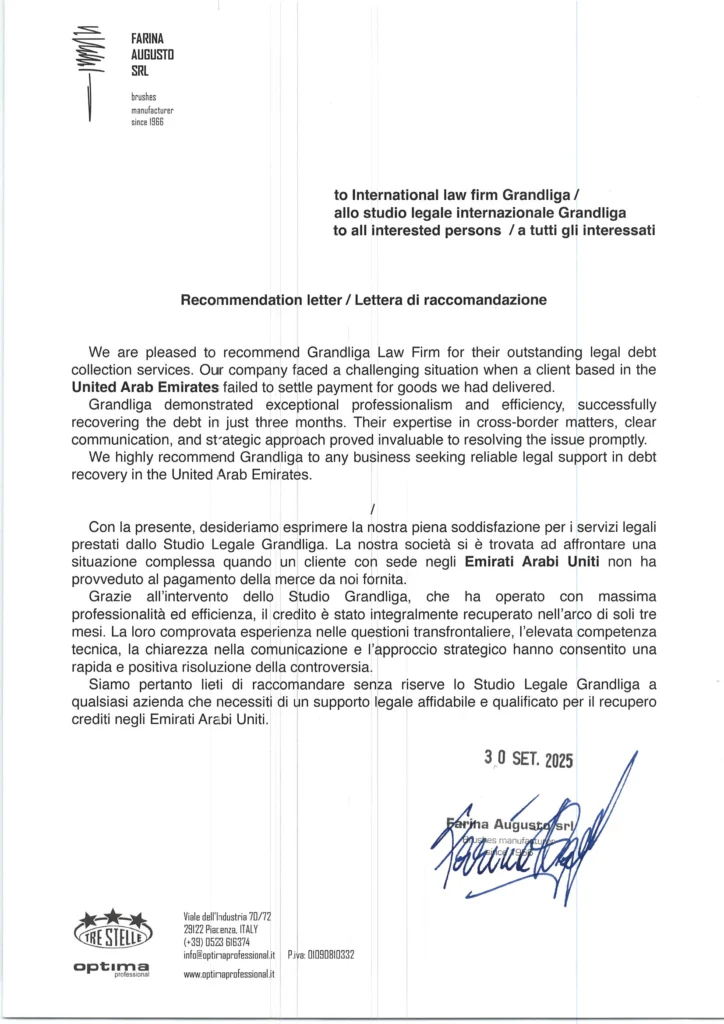






We will analyze and give recommendations