Let's discuss your case
We will analyze and give recommendations
The debt collection process in Nicaragua begins with a legal and financial analysis of the debtor: identification of the individual or company, address for notices, business activity, existence of registered assets or accounts, history of disputes and enforcement proceedings, and the quality of documents proving the obligation. In Nicaragua, this review is especially important because the strategy may vary between negotiation, prior mediation, ordinary court proceedings, summary proceedings, an order for payment procedure, or enforcement of an existing enforceable title.
If the debtor continues business activity, has an identifiable address, and there are no court or enforcement circumstances that make negotiation ineffective, the creditor may start an out-of-court collection stage. At this stage, the creditor verifies the debtor’s position, checks whether the debtor admits the obligation in whole or in part, and evaluates whether the case can be resolved through voluntary payment, a payment plan, return of goods, commercial set-off, or preparation for prior mediation.
Contact with the debtor begins after a formal demand is sent through available communication channels, such as postal mail, email, telephone, or messaging services. The purpose is not to exert improper pressure, but to clearly record the creditor’s position, confirm receipt of the demand, identify the persons with decision-making authority, and obtain a documented response regarding payment, objections, or a possible settlement proposal.
The duration of the out-of-court stage depends on the debtor’s conduct, the complexity of the documents, the location of the parties, and the realistic possibility of reaching an enforceable agreement. If the debtor does not respond, denies the debt without sufficient grounds, conceals assets, or uses negotiations to delay payment, the creditor should prepare the appropriate court procedure and preserve evidence of all notices and responses.
Before initiating court collection, the applicable limitation period should be assessed. As a general rule, the right to bring a claim is subject to a 10-year limitation period, unless a specific legal exception applies. For claims by an entrepreneur or merchant seeking payment for goods sold to persons who are not resellers, Nicaraguan civil law provides a 2-year period. The expiry of the limitation period is not applied automatically by the court; the debtor must raise it as a procedural defense.
The limitation period may be interrupted not only by the debtor’s express or implied acknowledgement of the debt, but also by any judicial or out-of-court action aimed at collecting the debt, enforcing the obligation, or exercising the corresponding claim. In addition, once a claim is admitted by the court, the pending proceedings may also affect the running of the limitation period. Therefore, in a debt recovery case in Nicaragua, it is important to document payment demands, correspondence, mediation, and filing of the claim.
Nicaraguan law provides for judicial debt collection mainly through ordinary court proceedings, summary proceedings, and an order for payment procedure. The choice of procedure depends on the amount of the claim, the nature of the debt, the quality of the supporting documents, the existence of objections from the debtor, and the procedural rules established by the Supreme Court of Justice for each type of case.
In civil proceedings, the parties generally participate with the assistance of a lawyer, and the court checks whether the submitted documents meet the required procedural form. In summary proceedings and in requests or objections filed within the order for payment procedure, legal assistance may not be mandatory in all cases if the filing follows the established form. However, if one party is represented or accompanied by a lawyer, the other party must also be represented by a lawyer.
For a foreign creditor, this makes early preparation of documents especially important. Powers of attorney, company documents, debt evidence, payment records, invoices, delivery documents, and translations should be organized before the claim is filed, because procedural defects may delay admission of the case or weaken the creditor’s position.
Before filing a civil claim, the parties must apply to the Directorate of Alternative Dispute Resolution or to a mediation center authorized and supervised by that Directorate in order to attempt to resolve the dispute without starting court proceedings. This stage is important in debt collection in Nicaragua because it allows the parties’ positions to be recorded and, if an agreement is reached, creates a basis for later enforcement.
If the parties reach an agreement and it is not performed, the creditor may seek its enforcement under the rules applicable to non-judicial enforceable documents, after judicial review of the agreement’s compliance with public order and legality. For this reason, the mediation agreement should be drafted precisely, indicating the amount, currency, payment schedule, interest, consequences of default, and full details of the parties.
If the parties do not reach an agreement or the summoned person does not appear, the mediation applicant may file a claim before the competent civil court and attach the certificate issued by the Directorate of Alternative Dispute Resolution or the authorized center, confirming that the procedure was initiated or held without an agreement. If such certificate is required and is missing, the claim may face admissibility problems.
In debt collection proceedings, attention should also be paid to the method of notifying the debtor. When the address is known, procedural notice must be served according to the ordinary rules. If the recipient has no known address or cannot be located, civil procedure allows notice by public announcement in the relevant cases; however, in the order for payment procedure, the payment demand cannot be served by public announcement. For this reason, identifying an address or place where the debtor can be found is especially important before choosing this procedure.
Ordinary court proceedings begin with a written claim filed before the competent court. The claim should identify the parties, the debtor’s address, the facts, the legal basis of the claim, the specific relief requested, the evidence, and the relevant attachments. In debt cases, ordinary court proceedings apply when the claim exceeds 200,000 Nicaraguan cordobas, according to the value criterion used by the Supreme Court of Justice, or when the value of the claim cannot be determined precisely.
Once the claim is accepted, the court summons the defendant to file an answer within the next thirty days. In the answer to the claim, the defendant must deny or admit the facts presented by the plaintiff. The court will consider the defendant’s silence or evasive answers as an implied denial of facts that may be harmful to him. The defendant may also expressly agree with the claim in the answer or at the preliminary hearing, admitting the grounds for the claim, after which the court will make a decision without the need for proof or any other procedure.
If, after the expiration of the time limit for responding to the claim, the defendant, having been duly notified, fails to appear in the proceedings, he will be declared to have failed to appear through his own fault. The defendant’s failure to participate will not prevent the continuation of the proceedings, and his failure to appear will be considered a denial of the facts.
After the response to the claim or upon expiration of the relevant time limits, the court will appoint an initial hearing for the parties within five days, which must take place no later than twenty days from the date of the appointment. The purpose of the initial hearing is to encourage the parties to reach an agreement, eliminate the claimed procedural deficiencies, precisely define the subject and objections of the parties, as well as the terms of their discussion; confirm the list of proposed evidence and admit the evidence that the parties intend to use at the evidentiary hearing.
If the only admissible evidence is documents that were presented in the proceedings and were not challenged, the evidentiary hearing will not be held. At the end of the initial hearing, the judicial body may issue a decision orally and then draw it up in writing. If there is a need to examine the admitted evidence, the court appoints evidentiary hearings, during which it questions witnesses, requests new evidence, and studies expert opinions.
After the examination of evidence is completed and before the end of the hearing, the parties are given the opportunity to present their closing arguments. After the end of the final arguments, the judge declares the hearing closed and ends the hearing. From this moment, the ten-day period for issuing a court decision begins.
Summary proceedings apply, among other cases, when the amount of the claim does not exceed 200,000 Nicaraguan cordobas, according to the value criterion established by the Supreme Court of Justice. The procedure starts with the filing of a claim, and the court decides on its admissibility within the applicable procedural period. Once the claim is admitted, the defendant is summoned to respond within a shorter period than in ordinary court proceedings.
After the response is filed or the relevant period expires, the court summons the parties to a hearing within the procedural timeframe. The hearing in summary proceedings combines the functions of the initial and evidentiary hearings in ordinary court proceedings: it helps clarify the dispute, resolve procedural issues, determine admissible evidence, and hear the parties’ positions. After the evidence and oral submissions are completed, the court issues its decision within the applicable period.
The order for payment procedure applies to the recovery of a monetary debt that is determined in amount, due, and enforceable, within the value set by the Supreme Court of Justice; this page keeps 50,000 Nicaraguan cordobas as the reference limit. To use this procedure, the creditor files a payment request indicating the identity of the creditor and debtor, the address or place where the debtor can be found, the origin and amount of the debt, and accrued interest. The debt may be supported by documents signed by the debtor, invoices, delivery receipts, or other documents normally used to prove a credit and debt relationship between the parties.
If the request meets the requirements and the documents provide initial proof of the creditor’s right, the court admits the request and orders the debtor to pay the claimed amount or appear and submit objections within 20 days from the day following notice. If the debtor does not appear, an enforcement order is issued for the amount due. The payment demand is served according to procedural rules, but not by public announcement.
If the debtor submits objections within the stated period, the court closes the order for payment procedure and starts summary proceedings to examine the objections. A counterclaim is not allowed in this procedure. If the objection concerns only an excessive amount claimed, enforcement may continue for the amount recognized as due, while the disputed part is handled under the applicable procedural rules.
The judgment of the court of first instance may be challenged by appeal within 10 days from the day following notice of the judgment. The appeal should state the grounds for disagreement, the request for full or partial reversal, and, where permitted, the need for a further review of the case file or the submission of admissible evidence.
The decision issued at second instance may be challenged before the civil chamber of the Supreme Court of Justice within 20 days from notice. This further review is not a complete new examination of the dispute: as a rule, it focuses on errors of law, control of the reasoning, and the grounds established by procedural law.
Once there is an enforceable court document, the creditor may start enforcement by filing an application with the competent court. For the enforcement of court documents, the court generally orders enforcement only after 20 days have passed from notice of the decision to the debtor. The application should identify the parties, the enforceable document, the result requested, the enforcement measures sought, and, where possible, the debtor’s assets that may be seized. If the creditor does not know the debtor’s assets, the creditor may ask the court to require the debtor to disclose assets and property rights.
During enforcement, the creditor’s claim may be satisfied through a payment requirement, seizure of assets, registry entries, sale of seized property, enforcement against property rights, and other measures provided by civil procedure. If seizure is ordered, the enforcement decision may identify specific assets indicated by the creditor and order notice to the relevant public registry for the necessary entries. If it is established that the debtor has no assets at all, the file may be provisionally archived, without preventing enforcement from being reopened if new assets are later found.
If the creditor already holds a foreign judgment, a final foreign decision, or a foreign arbitral award, debt recovery in Nicaragua may require recognition of that foreign document. Nicaraguan civil procedure provides that foreign enforceable documents, including foreign arbitral awards, may have enforceable effect in the Republic after recognition by the civil chamber of the Supreme Court of Justice. Once recognition and the necessary formalities are completed, enforcement is requested before the district civil court of the debtor’s domicile or the place where the asset to be delivered or used for recovery is located.
If a commercial debtor shows signs of insolvency, the creditor should assess whether a bankruptcy strategy or another collective recovery approach is appropriate. Nicaraguan commercial law provides that a merchant may be in a state of bankruptcy when the merchant stops making payments and does not benefit from the legal mechanisms allowing suspension or postponement of payments. A bankruptcy declaration may be requested by the merchant or by a legitimate creditor when the legal conditions are met.
After bankruptcy is declared, creditors generally may not start or continue individual enforcement against the bankrupt debtor, except in cases allowed for secured creditors and other claims outside the bankruptcy procedure. Pending cases that may affect the debtor’s assets are brought into the collective proceeding, and the creditor’s strategy should focus on verification of the claim, protection of security rights, and review of acts that may have improperly reduced the debtor’s estate.
Acts that may affect creditors include free transfers made after cessation of payments, payment of debts that were not yet due after that date, transactions with persons who knew about the cessation of payments, contracts where the debtor’s obligations clearly exceed what the debtor received in return, certain payments of due debts made by means other than money or credit instruments, and security granted over the debtor’s assets for debts that existed before cessation of payments.
The purpose of these actions is to protect the body of creditors and prevent the debtor’s estate from being reduced through fraudulent or preferential acts. If an act is annulled or becomes ineffective against the estate, the recovered assets or value may be included in the property subject to liquidation and may increase the possibility of proportional satisfaction of recognized claims.
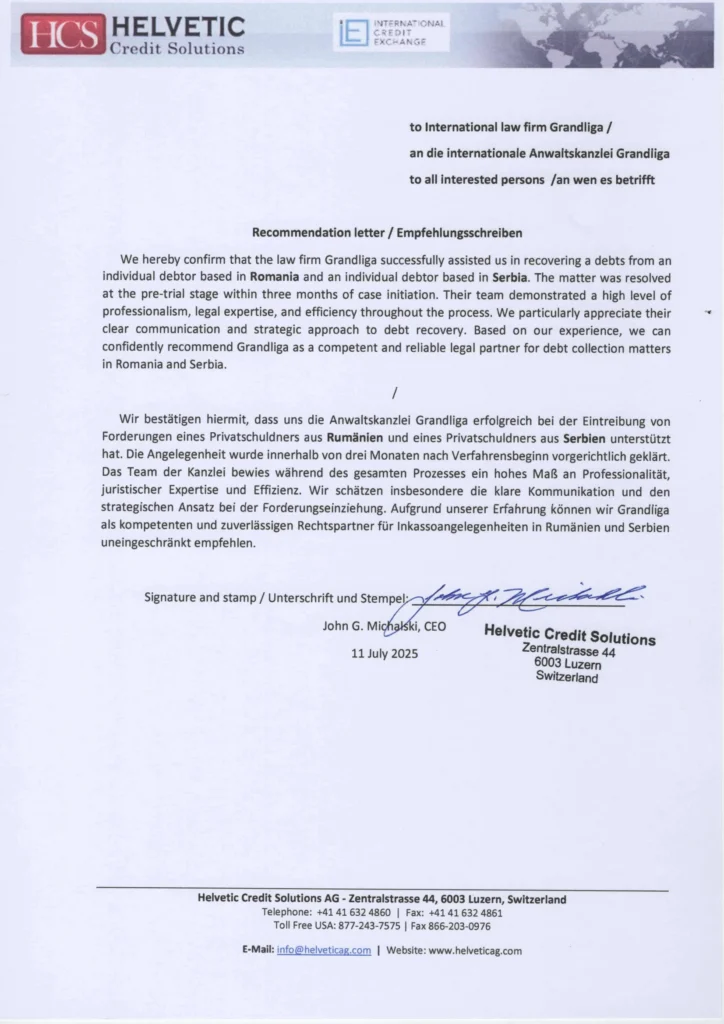
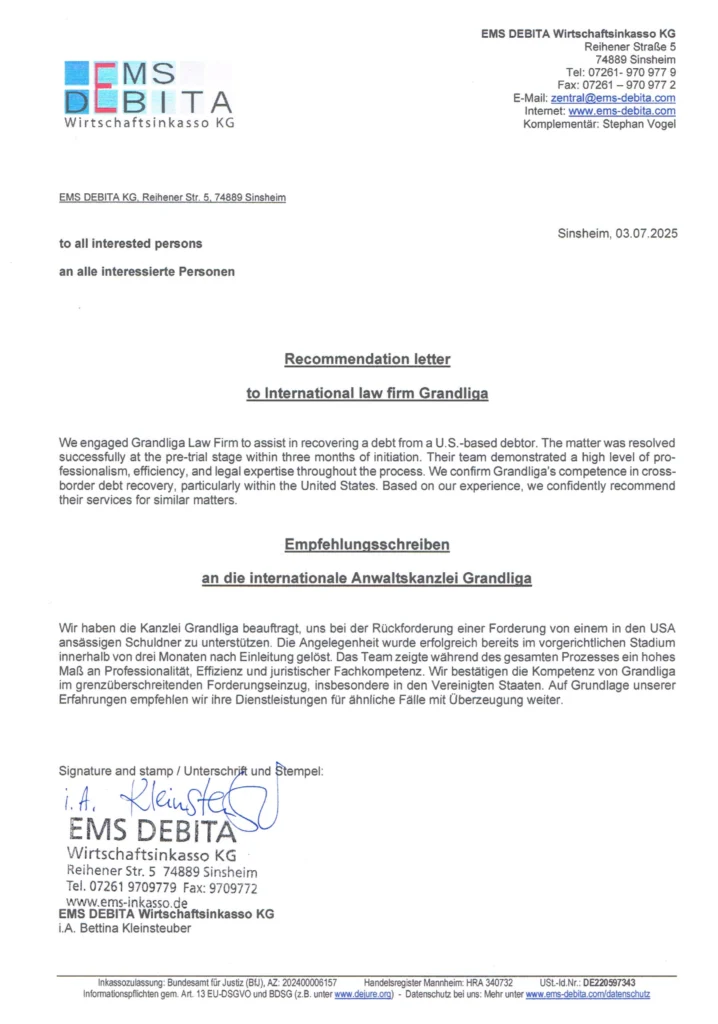
If you need assistance in a debt collection case in Nicaragua, the legal team of Grandliga can analyze the documents, assess the appropriate out-of-court or court procedure, prepare prior mediation, develop the procedural strategy, and support the case at the enforcement stage or during recognition of foreign enforceable documents. Each case requires an individual assessment of the debt, available evidence, the debtor’s location, recoverable assets, and the realistic possibility of recovery.
# DEBT COLLECTION AGENCY NICARAGUA
 948
948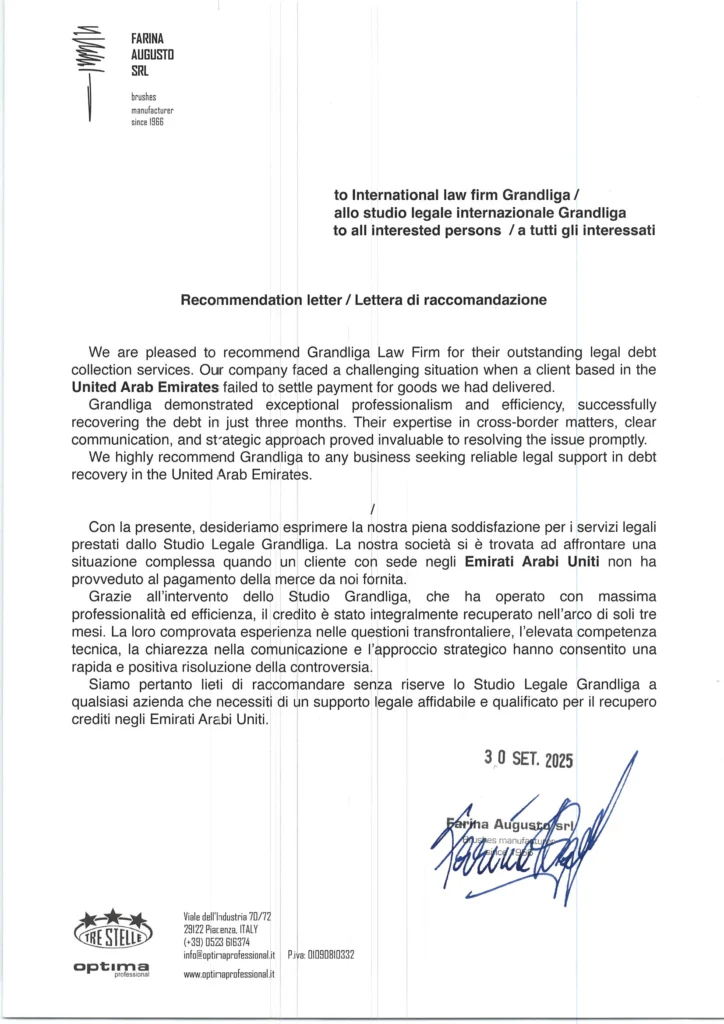


We will analyze and give recommendations