Let's discuss your case
We will analyze and give recommendations
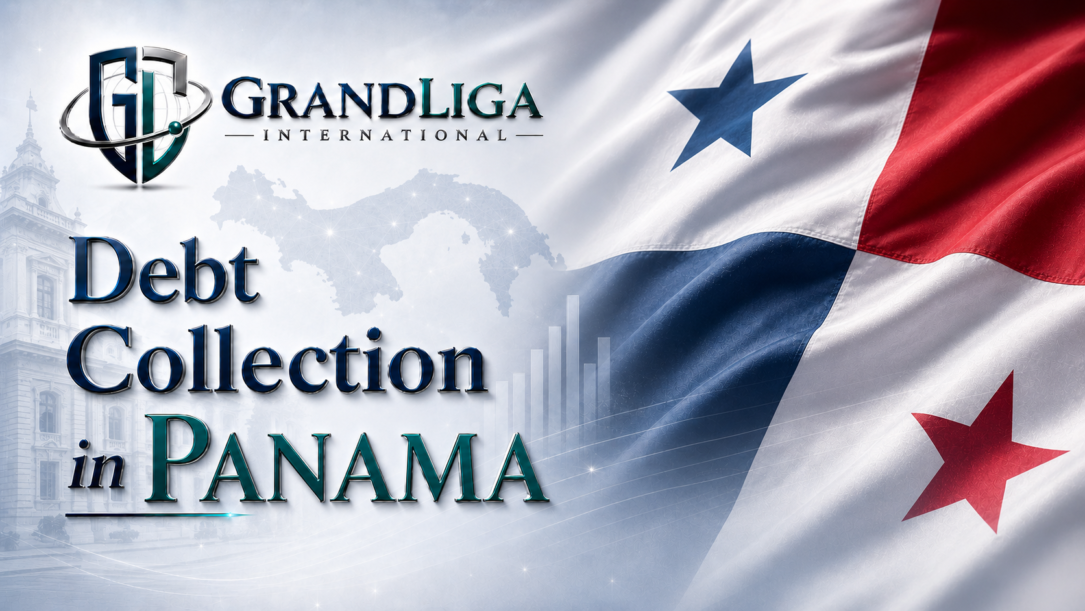
The debt collection in Panama process should begin with a practical review of the debtor and the available documents. Before choosing between negotiation, ordinary court proceedings, enforcement proceedings, enforcement of a court judgment or action in case of insolvency, it is necessary to assess the debtor’s business activity, payment history, registered assets, bank accounts, claims against third parties, pending litigation, existing enforcement proceedings and the real possibility of disputing the debt.
In Panama, this initial review is especially important because the recovery strategy may change depending on the type of document held by the creditor. One situation exists when the debt is supported only by invoices, commercial correspondence, delivery records or business documents that may still be challenged by the debtor. A different situation exists when the creditor holds a document that may serve as an enforceable instrument and allow a more direct judicial recovery route. It is also important to determine whether the debtor is an active Panamanian company, a branch, an individual engaged in commercial activity or a business with assets located in Panama, because recovery depends not only on proving the debt but also on the existence of assets that can be enforced against.
If the analysis shows that the debtor continues business activity, has no clear signs of insolvency and the debt is sufficiently documented, the out-of-court stage may be used. This stage helps verify the debtor’s real position, obtain a payment proposal, document full or partial acknowledgment of the debt and prepare the evidentiary basis for possible court action.
The out-of-court stage may include negotiations with the debtor to obtain full payment, partial payment, a payment schedule, return of goods, set-off of obligations, assumption of the debt by a third party or another commercial solution that preserves the creditor’s legal position.
Communication with the debtor should be documented. The payment demand may be sent by a method suitable for the case, but it is important to keep the notice, proof of delivery or receipt, the debtor’s replies, payment proposals, messages from persons with decision-making authority and any acknowledgment of the debt. For civil claims, an out-of-court demand by the creditor may be relevant for interrupting the limitation period, so the form and content of the communication should not be treated as ordinary informal correspondence.
The usual working period for informal out-of-court recovery is up to 60 days, unless the parties agree on instalment payment or another documented solution. If the debtor does not respond, denies the debt without sufficient grounds, avoids providing information about assets or shows signs of insolvency, the creditor should move to judicial debt collection or other legal measures depending on the available documents.
Before initiating court action, the creditor should determine the limitation period applicable to the specific claim. In Panama, personal actions that do not have a special limitation period are subject to a 7-year period. There are also special periods: for example, certain claims for professional fees, services, supplies and the price of goods sold by merchants to persons who are not merchants, or who are engaged in a different line of business, are subject to a 2-year period.
The limitation period should not be assessed in isolation, because it may depend on the civil, commercial, banking, contractual or documentary nature of the debt. The consequences of an expired limitation period apply at the request of the debtor. For civil claims, the limitation period may be interrupted by filing an action before the courts, by an out-of-court demand from the creditor and by any act of the debtor acknowledging the debt. After interruption, the limitation period begins to run again.
Panamanian law allows judicial debt collection through ordinary proceedings, enforcement proceedings or another applicable procedural route depending on the nature of the claim, the amount in dispute, the available evidence and the document on which the debt is based. After the entry into force of the new civil procedural framework, civil proceedings in Panama still include the formal stages of filing a claim, admission of the claim, notice to the defendant, defence, hearings, evidence, judgment and appeal, but the procedure is more focused, oral and managed by the judge.
Any person who must participate in court proceedings must do so through a legally authorised attorney with sufficient power of attorney. When preparing the claim, the creditor should review the contract, invoices, purchase orders, delivery records, account statements, correspondence, acknowledgments of debt, guarantees, accounting documents and any other evidence proving the existence, due nature and amount of the debt.
In ordinary proceedings, the amount in dispute remains relevant for determining jurisdiction. Lower-value cases are those exceeding 1,000 Panamanian balboas and not exceeding 10,000 Panamanian balboas, and they are heard at first instance by municipal judges. Higher-value cases are those exceeding 10,000 Panamanian balboas, and they are heard at first instance by circuit judges.
When the debt is not subject to a special procedure, the dispute is usually handled under the rules of ordinary proceedings. The process begins with the filing of the claim together with the relevant evidence and attachments. If the claim meets the legal requirements, the court admits it, orders notice to the defendant and grants the time limit for the defence. In ordinary proceedings, the defendant has ten days to submit the defence.
In the defence, the defendant must respond expressly and specifically to the claims and facts stated in the claim, indicating which facts are admitted, which are denied and which are unknown to the defendant. When denying facts or stating that facts are unknown, the defendant must precisely explain the reasons for that position. The defendant may also raise objections, submit evidence, dispute the amount claimed, allege payment, set-off, expiry of the limitation period, lack of standing, documentary defects or other defences. If the defendant does not submit a defence after proper notice, that failure may be treated as a factor against the defendant and the case continues under the applicable procedure.
The defendant may also admit the claims in whole or in part in the defence or before the first-instance judgment. If the admission is valid, the court may issue a judgment in accordance with the claim. However, the judge may reject the admission and order evidence to be examined on the court’s own initiative if fraud, collusion or another similar situation is identified.
After the defence period expires, the court may schedule a preliminary hearing. At that hearing, the judge checks the legality of the proceedings, corrects procedural defects, verifies the participation of necessary parties, defines the subject matter of the dispute, identifies disputed facts, reviews admitted evidence and may encourage settlement or mediation where appropriate.
If the dispute is limited to a question of law or to facts admitted by the parties, the court may decide the case without extensive evidentiary activity. If there are disputed facts or evidence to be taken, the judge sets the date for the final hearing. At the final hearing, admitted evidence is examined, the parties are heard and the court issues or prepares the judgment under the applicable procedure.
In addition to ordinary proceedings, it is essential in Panama to determine whether the creditor holds an enforceable instrument. Enforcement proceedings apply when the obligation is evidenced by a document with enforceable force and the creditor can claim performance of a clear, due and sufficiently determined obligation. Depending on the case, relevant documents may include money judgments, court orders, notarised instruments, acknowledged private documents, arbitral awards, court-approved settlements, cheques unpaid due to insufficient funds, certain banking or financial certificates and other documents recognised by law.
If the enforcement claim is filed with a document that has enforceable force, the judge may issue a payment order. The order requires the debtor to perform the obligation, pay costs and appear within the legal time limit to pay or identify assets for payment. The creditor may also identify the debtor’s assets so that the court can order attachment. If the payment order is appealed, the appeal does not automatically prevent all procedural steps from continuing, although the date of judicial sale is not set until the higher court decides.
When the document does not meet the requirements of an enforceable instrument or the enforcement route is revoked because those requirements are absent, the creditor may transform the claim into ordinary proceedings within the same case file if the relevant procedural conditions are met. This is important for a foreign creditor because it allows an alternative strategy to be planned from the beginning: use the enforcement route when the document is strong enough and preserve the ordinary route if the court considers that the document lacks sufficient enforceable force.
A first-instance decision may be appealed within the legal time limit. An appeal against a decision issued outside a hearing must be announced before the judge who issued it, at the time of personal notice or in writing within five days after notice. In appeals against orders and judgments, the appellant must state the grounds of appeal within the legal time limit, and the opposing party may object under the procedural rules. New evidence at second instance is limited and exceptional.
Where there is a risk of concealment, transfer or deterioration of assets, the creditor may consider applying for interim measures. These measures are intended to preserve the practical possibility of enforcing the future judgment and may be especially relevant where the debtor does not have an undisputed enforceable instrument, but the creditor has sufficient elements to support the claim in ordinary civil proceedings. Their effectiveness depends on urgency, available evidence, the ability to identify the debtor’s assets and the proportionality of the requested measure.
A frequent scenario in international debt collection in Panama arises when the creditor already has a foreign court judgment or a foreign arbitral award and intends to act against a debtor or assets located in Panama. In this situation, the analysis usually does not begin with a new lawsuit on the same debt, but with reviewing whether the foreign decision can be recognised and enforced in Panama.
Foreign court judgments and foreign arbitral awards have in Panama the force provided by the applicable treaties or conventions. If there is no special treaty with the country where the decision was issued, the decision may be enforced in Panama on the basis of reciprocity and provided that the legal requirements are met. The main points usually reviewed include whether the decision arises from a personal claim, whether the debtor was properly notified, whether the obligation is lawful under Panamanian law and whether the copy of the decision is authentic.
The application to determine whether a foreign court judgment should be enforced in Panama is submitted to the Supreme Court of Justice, unless an applicable treaty assigns jurisdiction to another court. At this stage, the court does not act as an ordinary instance to reconsider the entire debt dispute. It verifies whether the foreign decision can produce legal effects in Panama and serve as a basis for enforcement against the debtor’s assets.
Once the court judgment, recognised arbitral award or other enforceable document can be enforced, the creditor should move to the compulsory enforcement stage. At this stage, recovery may be directed against funds in accounts, the debtor’s claims against third parties, movable property, real estate, securities, financial instruments and other property rights of the debtor. The effectiveness of enforcement depends on asset tracing, the priority of other creditors, the existence of security interests, the debtor’s conduct and the timely request for the necessary measures.
If the debtor shows signs of insolvency, the creditor should assess whether individual recovery remains effective or whether the case should be considered within Panama’s insolvency framework. The insolvency regime is designed to protect credit and creditors’ rights through the reorganisation of a viable business or the orderly judicial liquidation of an inefficient business.
Insolvency should not be treated only as a means of pressure against the debtor. In Panama, it may be relevant when the debtor fails to meet due obligations, does not have sufficient assets to cover liabilities, has multiple creditors, faces separate enforcement actions or has entered into transactions that reduce the property available for payment. In such cases, the creditor’s strategy may include filing or verifying the claim, monitoring the estate and participating in decisions within the insolvency procedure.
In liquidation, if the debtor’s assets are insufficient to satisfy creditors in full, acts and contracts that harmed creditors may be examined. Relevant situations may include gratuitous acts or acts equivalent to gratuitous acts carried out after the declaration of liquidation or within the previous year; gratuitous acts in favour of related persons within four years before the date to which the liquidation is traced back; simulated or fraudulent transactions intended to hide property or its full or partial value; and judicial decisions that the debtor deliberately caused against itself to the detriment of creditors.
The cancellation of these transactions allows property, values or rights that improperly left the debtor’s estate to be returned to the liquidation estate, increasing the possibility of paying creditors and covering the costs of the insolvency procedure. In addition, the person who benefited from an act declared void may be liable to the liquidation estate in proportion to the damage caused. If the debtor is a company, such liability may extend to managers, administrators, directors, legal representatives, liquidators, general attorneys, partners or shareholders who benefited from those acts.
In the liquidation of a legal entity, liability claims against administrators, directors, managers, legal representatives, auditors or liquidators may also be examined. Where the case materials show reasonable indications of negligent or fraudulent conduct against creditors, the court may order measures over the property and rights of those persons under the applicable rules. For a foreign creditor, this point is important because recovery may depend not only on a claim against the debtor company itself, but also on identifying previous asset transactions and the persons who participated in the improper reduction of assets.
If you need support with debt collection in Panama, Grandliga can assist the case at all stages: debtor and asset analysis, review of contracts and documents, out-of-court demand, negotiations, selection of the court procedure, preparation for enforcement or ordinary proceedings, recognition of a foreign decision, compulsory enforcement and assessment of insolvency risks. The purpose of this work is to build a legally grounded and commercially realistic recovery strategy, taking into account the available documents, the debtor’s conduct and the practical possibility of recovering the debt.
# DEBT COLLECTION AGENCY PANAMA
 1348
1348

We will analyze and give recommendations