Let's discuss your case
We will analyze and give recommendations
The process of debt collection in Sri Lanka begins with a legal and factual assessment of the debtor, the basis of the debt and the documents that can support the creditor’s claim. At this stage, it is important to identify whether the debtor is a Sri Lankan company, an individual, a partnership, a branch or another commercial structure, and whether the claim is based on a written contract, invoice, delivery of goods, provision of services, cheque, promissory note, guarantee, foreign judgment or another enforceable document.
The creditor’s file should be reviewed before negotiations or court action begin. The evidence may include the contract, purchase order, invoice, delivery note, acceptance certificate, statement of account, payment history, correspondence with the debtor, written acknowledgment of debt, documents confirming the debtor’s address and business activity, information about pending litigation, existing enforcement proceedings, insolvency risks, available assets and any security given for the debt. This assessment determines whether the case should start with out-of-court recovery, mediation, ordinary court proceedings, summary procedure on a liquid claim, small claims proceedings, recognition and enforcement of a foreign judgment, execution measures or insolvency proceedings.
If the debtor has no pending court cases, no known enforcement obstacles and continues active commercial operations in Sri Lanka, an amicable recovery stage may be useful before filing a claim. If the debtor avoids contact, disputes the debt without evidence, transfers assets, ignores payment demands or already has enforcement proceedings against them, the strategy should focus on preserving documents, choosing the competent court and preparing the case for judicial recovery.
The out-of-court stage may include a written demand for payment, direct negotiations with the debtor, confirmation of the debt balance, discussion of an installment plan, return of goods, set-off, transfer of the obligation to another party or another commercially acceptable settlement. Communication with the debtor usually begins after a formal notice is sent by post, email, messenger or another reliable communication channel that can later confirm the creditor’s attempt to resolve the dispute.
For certain civil disputes in Sri Lanka, mediation may become a necessary procedural step before court action. Under the Mediation Boards regime, disputes relating to debt, damage or a demand affecting movable or immovable property with a value up to Rs. 1,000,000 may require referral to a Mediation Board. If settlement is not reached, the relevant certificate or report of non-settlement becomes important for the next procedural stage. In practice, this route is especially relevant for smaller commercial and civil debt disputes where the creditor needs to preserve the right to continue recovery through the court.
Before initiating judicial debt collection, the creditor should determine the applicable limitation period according to the nature of the claim. In Sri Lanka, a six-year limitation period may apply to claims based on a written promise, contract, agreement, security, promissory note or bill of exchange. Other types of monetary claims may have shorter limitation periods: for example, claims relating to goods sold and delivered, shop bills, book debts, work and labour may be subject to a one-year period, while certain claims for money lent without written security may fall under a three-year period.
A written acknowledgment of debt may be important for limitation purposes if it is made in writing and signed by the debtor or by a duly authorized agent. For a foreign creditor, this means that a simple oral promise to pay is weak evidence, while a signed acknowledgment, payment schedule, email confirmation from an authorized person, signed statement of account or other written document can significantly affect the legal assessment of the case.
Sri Lankan law provides several routes for judicial debt collection, and the correct procedure depends on the amount of the claim, the type of document, the debtor’s defence, the evidence available to the creditor and the legal status of the parties. A debt may be pursued through ordinary civil proceedings, summary procedure on a liquid claim, small claims proceedings, special debt recovery proceedings available to lending institutions, or enforcement of an existing judgment.
The ordinary judicial procedure is used when the debt is disputed, the claim requires examination of facts, the debtor raises objections, or the case cannot be handled under a special simplified route. The procedure is started by filing a plaint with the competent court. The plaint should set out the parties, the facts giving rise to the debt, the legal basis of the claim, the amount due, the interest claimed, the documents relied on and the relief requested from the court.
If the court accepts the claim for further proceedings, summons is issued to the defendant. Service of summons may be carried out by the process server, registered post or courier service, and in appropriate cases by electronic mail where the required documents are submitted to the court in electronic form. For a company or other body corporate, summons may be served at the registered office or principal place of business. The summons requires the defendant to appear and answer the claim on or before the date fixed by the court.
On the date fixed for appearance and answer, the defendant may admit the claim, dispute it or fail to participate. If the defendant admits the claim, the court may enter judgment according to the admission. If the defendant disputes the claim, the defendant must file a written answer, and the court may identify the factual and legal issues that need to be decided. If there is good cause, the court may allow further time for the answer. If the defendant fails to appear or fails to participate at the relevant procedural stage, the court may proceed in the defendant’s absence and decide the matter on the material before it.
When the dispute proceeds as a contested civil action, the court examines the pleadings, admitted facts, documents, affidavits, witness evidence and legal submissions. The court may pronounce judgment immediately after hearing the parties or on a later date notified to them. For a creditor, the practical strength of the case usually depends on the quality of the written contract, invoices, delivery or service evidence, payment history, debtor correspondence, acknowledgment of debt and proof that the debtor was properly notified and served.
The court may award interest according to the rate agreed by the parties in the document sued upon. If there is no agreed rate, the Civil Procedure Code refers to the legal rate determined by the Central Bank of Sri Lanka and published in the Gazette. Interest may also be considered for the period before the action, from the date of action to the decree, and after the decree where the court awards it.
For smaller monetary disputes, Sri Lanka also has a Small Claims Court procedure. A small claim may be filed within the local limits of the relevant judicial division, subject to the monetary and subject-matter limits set by law. The applicable monetary value is up to Rs. 2,000,000, excluding interest. The claim is usually supported by the plaint, affidavits and documents, including the contract, invoice, cheque, promissory note, written instrument, statement of account or other document relied on by the creditor.
The small claims procedure is document-focused and designed for faster handling of suitable civil claims. The court may encourage settlement, rely on affidavits, allow the production of relevant documents and summon witnesses or require documents where the parties are at variance. A document submitted to the Small Claims Court does not need separate proof unless the opposing party challenges its genuineness with valid reasons. The court is expected to make every effort to conclude the proceedings within eighteen months from commencement, unless the judge records reasons for delay. Appeals from a judgment of the Small Claims Court are directed to the High Court for an error of fact or law, and applications for leave to appeal or final appeals under the Small Claims Courts’ Procedure Act are to be heard and concluded within twelve months from the filing of the application or appeal, unless reasons for delay are recorded.
The summary procedure on liquid claims may be used where the claim is for a debt or liquidated demand in money arising from a bill of exchange, promissory note, cheque, written instrument, written contract for a liquidated amount or guarantee connected with such debt. This route is suitable for claims that are clearly documented and quantified, rather than for cases requiring a broad factual investigation into performance, defects, damages or disputed commercial obligations.
The creditor should rely on the written instrument or contract and supporting affidavit. In practice, the strength of this route depends on whether the amount is certain, whether the document sued upon is properly stamped where stamping is required, whether the document is free from suspicious alteration or erasure, and whether the claim is within the applicable limitation period. If the court is satisfied with the documents and affidavit, it may enter a decree nisi for a sum not exceeding the amount claimed, together with interest and costs allowed by the court.
The defendant may appear and defend only with leave of court. This makes the procedure more focused than an ordinary contested action: the debtor must show a sufficient basis for resisting the liquid claim rather than simply delaying the proceedings by a general denial. If the defendant does not obtain leave to defend, or if the court finds that the defence does not raise a sufficient answer to the claim, the creditor may obtain a decree more quickly than in the ordinary procedure.
A separate special route exists for debt recovery by lending institutions under the Debt Recovery Special Provisions Act. This procedure is available to a lending institution for recovery of a debt in the District Court within whose local jurisdiction the defendant resides, the cause of action arose or the contract sought to be enforced was made. It applies to qualifying lending-institution debts and is connected with a more document-driven process than an ordinary civil claim.
In an action by a lending institution, the institution files a plaint together with an affidavit stating that the sum claimed is lawfully due, a draft decree nisi, the required stamps and copies of the plaint, affidavit and documents relied on for each defendant. The affidavit may be made by a director, principal officer or an attorney-at-law duly authorized to bring and conduct the action, where that person has personal knowledge of the facts. The court then assesses the documents before issuing a decree nisi.
Service of the decree nisi in this procedure is usually made by registered post to the address given by the defendant to the institution for service of process. Proof of service may be established by the advice of delivery or other statutory proof of service. Where registered post service does not produce the required delivery evidence, the court may authorize service by affixing the decree nisi through the Fiscal or another officer authorized by the court.
For bank loans secured by mortgaged property, Sri Lankan law also provides a separate recovery route under the Recovery of Loans by Banks Special Provisions Act. Where default is made in payment of principal, interest or both, default may be treated as applying to the whole unpaid portion of the loan and the interest due. Subject to the statutory requirements, the bank’s board may authorize the sale of mortgaged property by public auction or authorize a manager to take possession of mortgaged immovable property, manage and maintain it, or take control of an agricultural or industrial undertaking where the secured movable property is located. For the procedures under sections 3, 4 and 5 of that Act, the principal amount borrowed must be at least Rs. 5,000,000, excluding accrued interest and penalties.
For a debtor, these special procedures create a higher practical risk where the debt is based on clear loan documentation, a written security instrument, a mortgage, a cheque, a promissory note or another liquid document. For a creditor, they require careful preparation of the loan file, security documents, notices, registered address information, payment history, interest calculation and proof that the claim falls within the correct statutory route.
A party dissatisfied with a final judgment or a decree in a civil debt case may usually start an appeal by presenting a notice of appeal to the court of first instance within fourteen days from the date when the decree or order appealed against was pronounced. In calculating this period, the day of pronouncement, the day of presentation, Sundays and public holidays are excluded. The notice of appeal must identify the court, case number, parties, appellant, respondent and the relief claimed, and it must be accompanied by the required security for costs or waiver and proof that a copy of the notice was served on the respondent.
After the notice of appeal, the appellant must file a petition of appeal within sixty days from the date of the judgment or decree appealed against. The petition of appeal should set out the circumstances of the case, the grounds of objection to the judgment or decree and the relief sought. This sixty-day period is treated strictly: if the petition is not presented within the statutory period, the original court may refuse to receive the appeal.
Interlocutory orders are treated differently from final judgments. A party dissatisfied with an order made during the course of a civil action may appeal only with leave to appeal first obtained from the appellate court. This distinction is important in debt recovery cases because a procedural order, default order, order on documents, order on leave to defend or another interim decision may not follow the same appeal route as a final decree.
In small claims proceedings, a party aggrieved by a judgment may appeal to the High Court for an error of fact or law. An order of the Small Claims Court, including an order setting aside or refusing to set aside a default judgment, may be appealed to the High Court only with leave first obtained from that court. Any application for leave to appeal or final appeal under the Small Claims Courts’ Procedure Act must be heard and concluded within twelve months from the filing of the application or appeal, unless the judge records reasons for delay.
In special proceedings for debt recovery by lending institutions, the appeal route may also affect execution. The Debt Recovery Special Provisions Act contains separate appeal-related rules, including rules that proceedings in the original court are not automatically stayed merely because leave to appeal is granted and that a decree entered by the Court of Appeal may operate as a writ of execution. This is important where the debtor tries to delay recovery after a decree nisi or decree absolute has been entered.
Where an appeal from the Civil Appellate High Court or the Court of Appeal to the Supreme Court of Sri Lanka is available, the application for leave or special leave to appeal is generally subject to a six-week period from the relevant judgment, order or decree. The Supreme Court of Sri Lanka is the final appellate court, and its decision is final.
If the creditor already has a judgment from another country, the case may require recognition, registration and enforcement of foreign judgments in Sri Lanka before local execution measures can be used. The Reciprocal Recognition, Registration and Enforcement of Foreign Judgments Act, No. 49 of 2024 came into operation on 26 March 2025 and applies to judgments from the foreign countries specified by the relevant Gazette Order. For commercial debt matters, the registering court may be the District Court of Colombo or another court designated for this purpose.
An application for recognition, registration and enforcement of a foreign judgment should be made within ten years from the date of the final judgment and accompanied by the certificate issued by the original court authenticating the judgment and other prescribed documents. The application is considered by way of summary procedure. The Act provides that the registering court shall decide the matter on petitions, statements, affidavits and documents without oral evidence and within the statutory six-month framework. After registration, the foreign judgment has the same force and effect as a judgment of the registering court in Sri Lanka. Practical risks include insufficient notice to the defendant in the original proceedings, fraud, reversal or setting aside of the foreign judgment, lack of applicability of the Act to the country of origin, and the need for a proper translation where the judgment is not in English or in the language of the Sri Lankan court.
Once a Sri Lankan judgment or a registered foreign judgment becomes enforceable, the creditor should initiate enforcement proceedings. Under the Civil Procedure Code, an application to execute a decree is generally subject to a ten-year period from the date of the decree or from the decree on appeal affirming it. A writ of execution that remains unexecuted is in force for one year from its issue, but it may be renewed or a fresh writ may be issued until satisfaction of the decree is obtained.
The execution process is initiated by an application to the court that made the decree. The application should identify the case, the parties, the date of the decree, any appeal, previous execution attempts, the amount due with interest and costs, and the mode in which the assistance of the court is required. For seizure and sale of property, the Fiscal is put in motion through the court’s execution process.
Depending on the nature of the decree and the debtor’s assets, enforcement proceedings may include attachment and sale of movable property, execution against immovable property, attachment of money or receivables, enforcement against shares or other property interests, delivery of specific property, or other measures available under the Civil Procedure Code. For a foreign creditor, the practical value of enforcement usually depends on whether the debtor has identifiable assets in Sri Lanka, whether the assets are registered in the debtor’s name, whether there are competing creditors, and whether insolvency proceedings or prior execution measures affect recovery.
If the debtor is unable to pay debts and the legal conditions are met, insolvency proceedings may become relevant for recovery. A creditor may initiate proceedings where the debtor has committed an act of insolvency and the creditor’s debt meets the statutory requirements for a petition. Acts of insolvency may include leaving Sri Lanka or remaining abroad with the intention of defeating or delaying creditors, concealing assets, making fraudulent grants, conveyances, mortgages, gifts, deliveries or transfers of property, lying in prison for twenty-one days in connection with debt, filing a declaration of insolvency, failing to pay, secure or compound a judgment debt within thirty days after written notice, or disobeying a court order for payment after service of a peremptory order.
Insolvency can also be important when the debtor has transferred assets before or during the recovery process. Sri Lankan insolvency law addresses transactions that may prejudice creditors, including conveyances without valuable consideration, fraudulent preferences, certain powers of attorney or consents to judgment given shortly before the insolvency petition, and transactions made with the intention of defeating or delaying creditors. These issues are especially important where the debtor has transferred property to related persons, preferred one creditor over others, moved assets out of the ordinary course of business or attempted to reduce the estate available for distribution.
If the relevant transaction is challenged successfully, the purpose is to restore value to the debtor’s estate and increase the pool of assets available for creditors and the costs of the insolvency process. The creditor’s strategy should therefore include an analysis of asset transfers, related-party transactions, payments made shortly before insolvency, suspicious security arrangements, hidden receivables, company shares, movable property, immovable property and documents showing who actually controlled or benefited from the transaction.
Where the debtor is a company or business structure, the conduct of persons who managed or controlled the debtor may also be relevant if there is evidence of concealment of property, fictitious debts, false books, fraudulent transfers or other conduct that damaged creditors. The recovery strategy should combine the ordinary claim, execution measures and insolvency remedies so that the creditor can pursue both the debt itself and transactions that reduced the debtor’s recoverable assets.
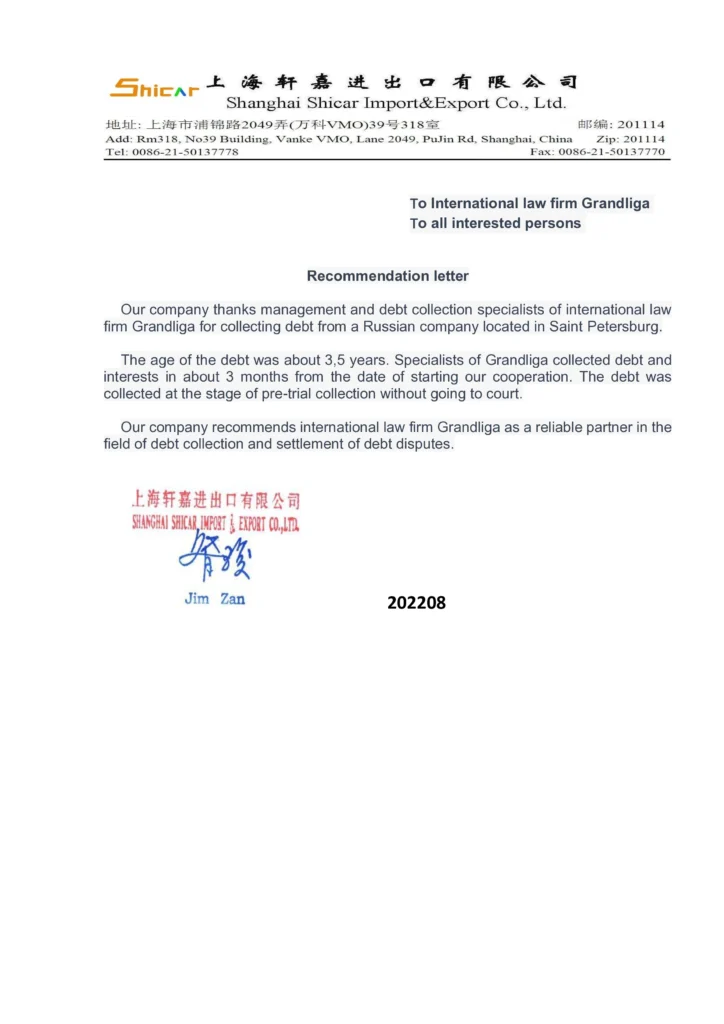
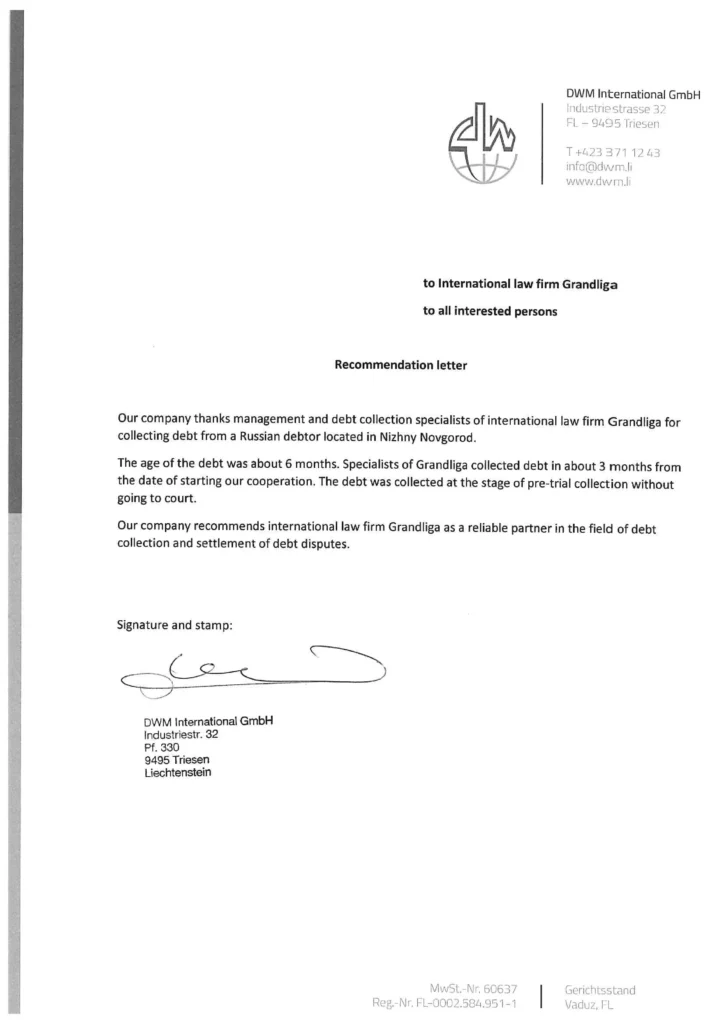
If you need support with debt collection in Sri Lanka, Grandliga can assist at all key stages of the recovery process: debtor analysis, preparation of evidence, out-of-court negotiations, mediation-related steps, ordinary court proceedings, summary procedure on liquid claims, small claims, recognition and enforcement of foreign judgments, execution through the court and Fiscal, and insolvency-related recovery measures. We help creditors choose a legally appropriate route, prepare the case materials and coordinate the recovery strategy for cross-border and local debt matters in Sri Lanka.
# DEBT COLLECTION AGENCY SRI LANKA
 960
960

We will analyze and give recommendations