
 Somalia
The process of debt collection in Somalia should begin with identifying the exact debtor and assessing whether the claim can be proved against that legal or natural person. For a commercial debt, the first review should cover the debtor’s registration details, business activity, known address, decision-makers, contract history, invoices, delivery or acceptance documents, correspondence, acknowledgments of debt, existing court cases, enforcement records and visible assets. Where the debtor is a company, checking its registration and licensing data is important because company registration in Somalia is handled through the Ministry of Commerce and Industries framework.
If the debtor is active, has a reachable business presence and there is enough documentary evidence to support the claim, the creditor can usually start with the out-of-court collection stage. If the debtor is already involved in litigation, has no visible assets, disputes the debt from the beginning or cannot be reliably identified, the strategy should be built around court proceedings and future enforcement from the start.
The out-of-court debt collection stage involves documented negotiations with the debtor in order to obtain payment of the creditor’s claim or reach another commercially acceptable settlement, such as return of goods, transfer of the debt to a third party, partial repayment, payment by installments or another agreed form of performance.
Communication with the debtor should begin after a written demand notice has been sent. It may be conducted by mail, email, phone or instant messengers, but the key requirement is that the communication remains lawful, documented and suitable for later use as evidence. The practical objective is to reach the debtor’s decision-makers, confirm the debtor’s position, obtain written acknowledgment of the debt where possible and create a clear record of settlement negotiations. If the debtor does not respond, refuses to pay, disputes the claim without evidence or uses negotiations only to delay payment, the case should proceed to judicial collection.
Before initiating judicial collection, the applicable limitation period and the date from which it starts to run should be determined. Under the Somali Civil Code, the general prescription period for personal obligations is five years, unless a special rule applies to the particular type of claim. For debt recovery, the maturity date of the debt is especially important: the prescription period does not start before the debt becomes due. Prescription may be interrupted by legal proceedings, a summons, attachment or another procedural act by which the creditor claims its right. It may also be affected by the debtor’s express or implied acknowledgment of the creditor’s right, including the provision of a pledge as security for the debt.
If prescription is interrupted, a new prescription period begins to run after the effect of the interrupting act has ceased. In debt disputes, limitation should therefore be assessed together with the contract, due date, payment schedule, correspondence, partial payments, acknowledgments of debt, security documents and any prior legal action. For debt collection in Somalia, this review is important before sending the claim to court, because prescription is not applied by the court on its own initiative and must be invoked by the debtor or another interested party.
It should also be taken into account that judicial debt collection in Somalia may be affected by the practical capacity of local courts, the location of the debtor, the availability of evidence and the presence of assets that can be reached through enforcement. Somalia’s constitutional framework vests judicial authority in the courts, but in practice creditors may also encounter customary or informal dispute-resolution mechanisms, especially where the dispute is connected with local business relationships, community structures or areas with limited access to formal courts. These mechanisms may influence negotiations and the debtor’s behavior, but they should not replace a documented legal strategy based on contracts, evidence, court proceedings and enforceable assets.
In cross-border contracts connected with Somalia, international commercial arbitration can be useful at the contract-planning stage, especially where the parties choose a neutral seat such as Djibouti or the United Arab Emirates. However, the choice of an arbitration seat outside Somalia does not by itself guarantee enforcement in Somalia. Somalia is not listed by UNCITRAL as a contracting state to the New York Convention, while Djibouti and the United Arab Emirates are listed as contracting states. For this reason, an arbitration clause should be coordinated with an enforcement strategy: where the debtor’s main assets are in Somalia, it should be considered how the award or the underlying claim can be used before the competent local court and whether the debtor has assets that can realistically be reached.
At the local level, judicial debt collection in Somalia is based on the civil procedural framework and may be conducted through the ordinary court process or, where the claim is suitable, through the order for payment procedure. The constitutional framework vests judicial authority in the courts and provides for a national court structure that includes the Constitutional Court, Federal Government level courts and Federal Member State level courts. For debt recovery, this means that the place of the debtor, the nature of the dispute, the value of the claim, the location of assets and the need for later enforcement should be considered before choosing the procedural route.
The ordinary court procedure begins with the filing of a statement of claim requesting that the defendant be summoned before the court. The statement of claim should identify the parties, describe the legal and factual basis of the debt, specify the amount claimed, indicate when the debt became due and attach the documents on which the creditor relies. After the claim is filed, the case is registered, a case file is prepared and the defendant is notified through the applicable service procedure.
The time for the defendant’s appearance depends on the defendant’s location and the method of notification. If the defendant fails to appear after proper service, the court may set a new hearing date or continue the proceedings in the defendant’s absence where the procedural conditions are met. If both parties appear at the first hearing, the court may first attempt to reconcile them.
If reconciliation is not achieved, the court proceeds to examination of the case. The claimant presents the claim, the defendant is given the opportunity to state objections and the court determines whether the dispute can be decided on the basis of the submitted materials or whether further evidence must be examined. In a debt case, the evidence may include the contract, invoices, delivery or acceptance documents, account statements, correspondence, written acknowledgment of debt, guarantees, security documents and proof that the payment obligation has become due.
After the evidence stage is completed, the court hears the parties’ final arguments and issues a decision.
The order for payment procedure is intended for monetary claims where the amount is liquid, due and supported by written documents. It is most suitable when the creditor can present clear evidence of the debt, such as a signed contract, invoice, delivery document, acceptance act, statement of account, promissory document or written acknowledgment of the obligation. The creditor files an application with the court and attaches the documents proving the amount and maturity of the debt.
If the court considers the application justified, it may issue an order requiring the debtor to pay or object within the period stated in the order. If the debtor does not object after proper service, the order may acquire enforceable effect and be used for compulsory execution. If the debtor files an objection, the dispute is transferred into a contested procedure where the court examines the parties’ positions and evidence before issuing a final decision.
In cross-border debt collection, this procedure is most useful where the debt is documentary, the debtor can be properly served and there are assets in Somalia against which enforcement can realistically be directed. If the claim is disputed, depends on complex evidence or requires witness examination, the ordinary court process is usually a more appropriate route.
A first-instance judgment in a debt case may be challenged through an appeal to the competent Court of Appeal. Under the Somali Civil Procedure Code, the appeal period is 30 days and starts from the date on which the judgment is notified to the party. If the judgment has not been notified, the right to appeal is subject to a long-stop limit: no appeal may be filed after one year from the publication of the judgment. Where one party files a principal appeal, the opposing party may file an incidental appeal within 30 days from the notification of the principal appeal.
The appeal is filed in the form of a citation containing a summary of the facts and the grounds of appeal. It is submitted to the court that issued the appealed judgment, after which the case file is transmitted to the appeal court. At the appeal stage, new claims are not admitted, but new objections, documents and means of evidence may be raised where permitted by the procedural rules. The appeal judge verifies the proper constitution of the parties, may order the involvement of other necessary parties, may attempt reconciliation and then proceeds with examination of the appeal.
The judgment of the Court of Appeal may be challenged before the Supreme Court of Somalia by petition. Such a petition is not a full rehearing of the debt dispute and is limited to specific legal grounds, including lack of jurisdiction or competence, violation or false application of law, nullity of the judgment or proceedings, or omission or insufficient reasoning on a decisive point of the dispute. The petition period is also 30 days from notification of the judgment, and if the judgment has not been notified, the petition becomes inadmissible after one year from publication.
The effect of an appeal on enforcement must be assessed separately. Under the civil procedure rules, an appeal may suspend execution where provisional execution has not been ordered, while other forms of challenge do not suspend execution unless the law expressly provides otherwise. The appeal court may also consider issues of provisional execution or suspension where such a request is properly raised. This means that appeal deadlines, notification of the judgment and the existence of any provisional enforcement order should be checked before starting or pausing enforcement steps.
A separate issue arises where the creditor already has a foreign court judgment and wants to use it against a debtor or assets in Somalia. Recognition and enforcement of foreign judgments should be distinguished from enforcement of a Somali court decision and from enforcement of a foreign arbitral award. Somalia is not listed among the contracting parties to the 2019 Hague Judgments Convention, so automatic treaty-based recognition of a foreign judgment in Somalia should not be assumed.
For a foreign judgment to be useful in a Somalia-related debt case, it should be assessed whether the judgment is final, whether the debtor was properly notified in the foreign proceedings, whether the foreign court had a sufficient jurisdictional connection with the dispute, whether the judgment concerns a civil or commercial debt and whether enforcement would be directed against identifiable assets in Somalia. Where direct recognition is not the most practical route, the foreign judgment and the underlying case documents may still be important evidence in a local claim against the debtor.
After the court decision becomes enforceable, the enforcement procedure against the debtor’s assets should be initiated. Enforcement may be directed at the debtor’s funds, receivables, movable property, immovable property, business assets, goods, equipment and property or claims held by third parties. In practice, these assets should be identified as early as possible, because the commercial value of a court judgment depends on whether the debtor has assets that can be located, seized and converted into payment.
In cross-border debt collection, enforcement in Somalia should also include sanctions screening and payment-route planning. Somalia is not subject to a general country-wide sanctions embargo for ordinary civil debt payments, but Somalia-related sanctions regimes include targeted asset freezes and prohibitions on making funds or economic resources available to designated persons or entities, including persons associated with Al-Shabaab. Before accepting a settlement payment, enforcing against assets, instructing a local intermediary or receiving money through a third party, the debtor, beneficial owners, directors, payment beneficiaries, banks, money transfer businesses and any third-party payer involved in the transaction should be screened.
The currency and payment route should be agreed and documented separately. Somalia’s economy is highly dollarized, and mobile money and money transfer businesses play a major role in domestic and cross-border payments. At the same time, Somalia-related transactions may face enhanced AML/CFT checks, correspondent banking restrictions, intermediary bank fees, delays in SWIFT transfers, additional KYC requests and questions about the source of funds. For this reason, the enforcement plan should specify the payment currency, receiving account, permitted payment channel, conversion terms, payment reference, supporting documents and compliance checks required before funds are accepted or transferred.
Somali law does not provide a developed special bankruptcy procedure that can be used by a commercial creditor as a separate standard route for debt recovery. If the debtor is insolvent, the recovery strategy should focus on civil-law remedies against transactions that reduced the debtor’s assets or gave an unjustified advantage to one creditor over others.
Under the Somali Civil Code, where a creditor alleges the debtor’s insolvency, the creditor must establish the amount of the debtor’s debts, and the debtor must prove that its assets are equal to or exceed its liabilities. If the debtor has transferred property, given assets away, entered into simulated transactions, paid one creditor before the due date, created an artificial preference for a selected creditor or transferred assets to affiliated persons, the creditor can assess whether these acts may be challenged as prejudicial to creditors.
If a prejudicial act is declared void, the result benefits all creditors whose interests were harmed by that act. A person who acquired property or another right from an insolvent debtor may avoid the consequences of the claim by depositing with the court treasury the value equivalent to the alienated property. If the harmful act consists of giving one creditor an unjustified preference, the consequence is the loss of that advantage. If an insolvent debtor pays one creditor before the original due date, that payment is not valid against the other creditors. A payment made after the due date may also be ineffective against other creditors if it was made as a result of a fraudulent arrangement between the debtor and the creditor who received payment.
A creditor may also bring an action to set aside an alienation of property. This action must be brought within three years from the date when the creditor became aware of the grounds for the claim and, in any event, not later than fifteen years from the date of the contested alienation. In practice, this mechanism is relevant where the debtor has transferred assets to directors, shareholders, affiliated companies, relatives, nominees, preferred creditors or third-party transferees before enforcement could be completed.
Controlling persons are relevant to the recovery strategy where they personally guaranteed the debt, received the debtor’s assets, participated in a simulated transaction, helped create an unjustified preference, acted as nominees or became direct beneficiaries of a transfer that reduced the debtor’s ability to satisfy creditors. In such cases, recovery may require identifying the transaction, proving the connection between the debtor and the recipient, challenging the transfer and returning value to the pool of assets available for creditor recovery.
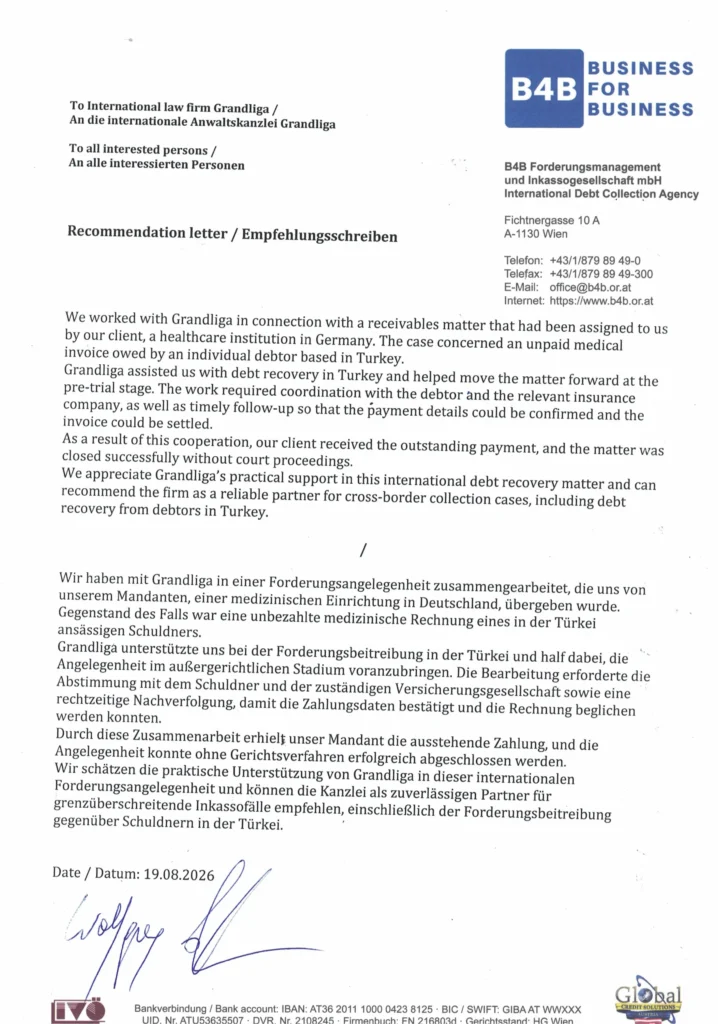
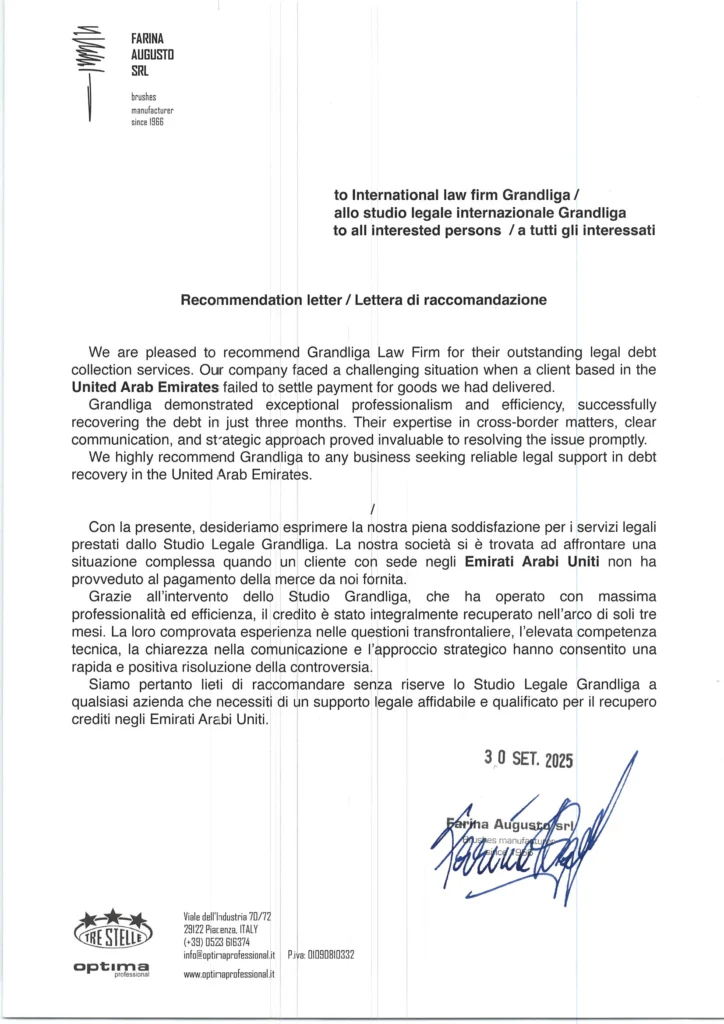
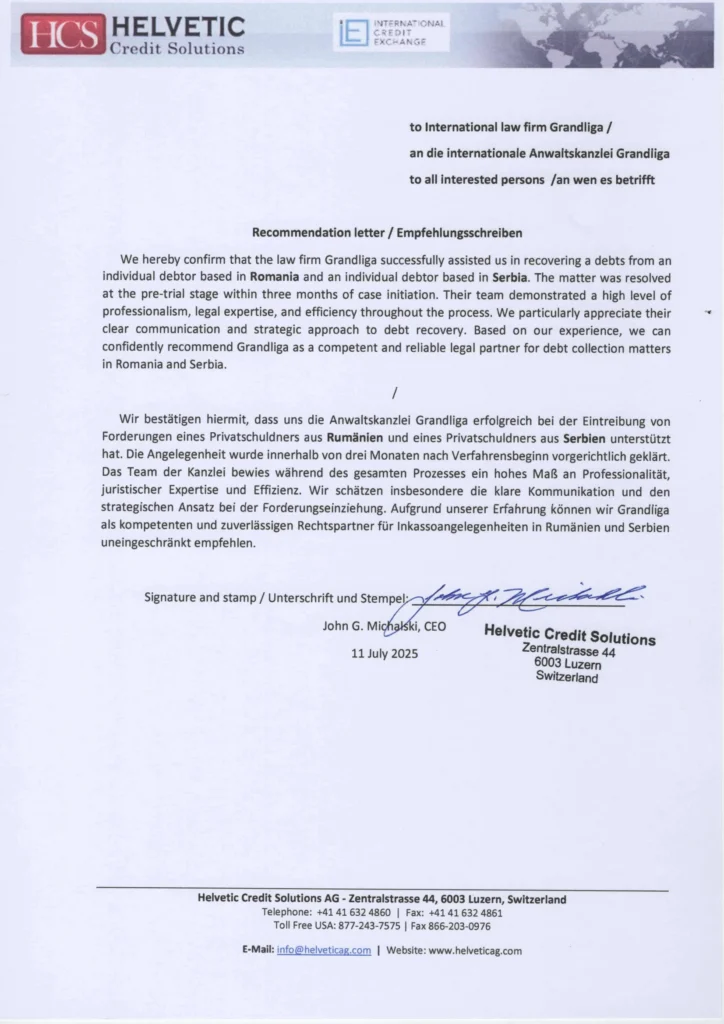
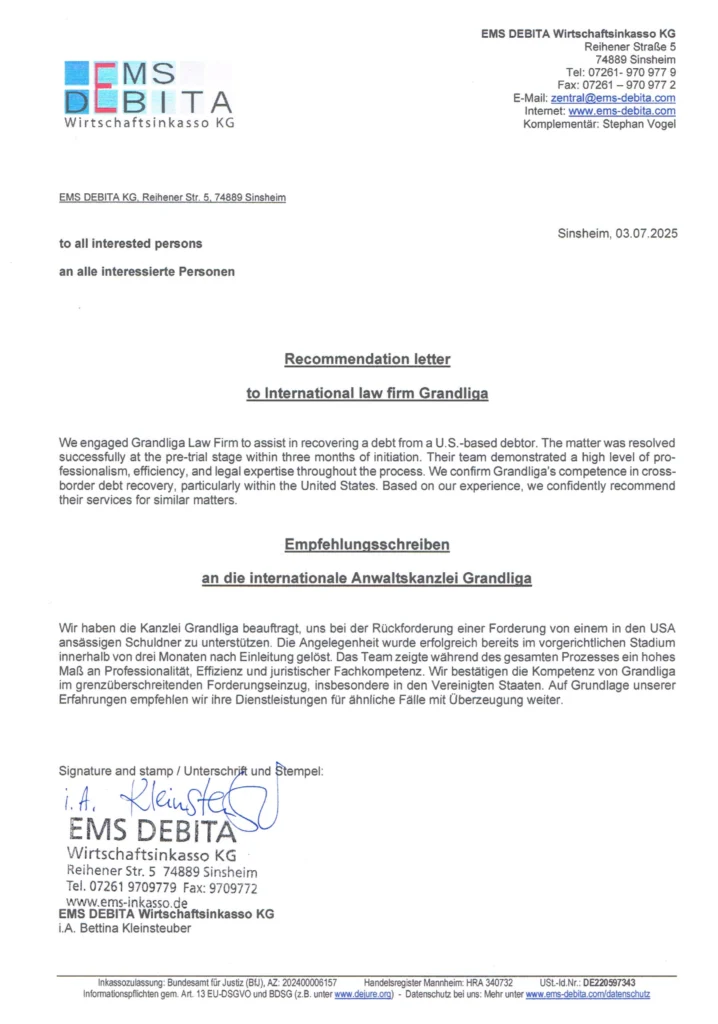
If you are dealing with a debtor in Somalia or need to recover a cross-border commercial debt connected with this jurisdiction, Grandliga can assist with a legal assessment of the claim and the preparation of a practical recovery strategy. Our support may include debtor identification, review of contracts and evidence, out-of-court negotiations, preparation of court documents, representation in judicial debt collection, use of the order for payment procedure where applicable, appeal-related support, recognition and enforcement of foreign judgments, enforcement planning, sanctions and payment-route checks, and analysis of debtor insolvency or suspicious asset transfers. Contact us to review your case, assess the available recovery options and determine the most effective legal route for debt collection in Somalia.