
 Côte d'Ivoire
In Côte d’Ivoire, the appropriate route for debt recovery may depend on whether the obligation is civil or commercial and on the evidence available to support the claim. The review should therefore establish how the debt arose, the amount due and the documents that confirm it, such as contracts, invoices, delivery or service records, correspondence, acknowledgments of debt and partial payments.
In Ivory Coast cases, debtor analysis is not limited to confirming the existence of an unpaid debt. It is also important to verify whether the debtor actually operates in Abidjan or another part of the country, whether the debtor is entered in the relevant register, whether there is an active business establishment, bank relationships, claims against third parties, local contracts, movable or immovable property and signs of payment difficulties.
This review helps determine whether the matter can be handled through negotiation, whether judicial debt collection should be initiated, whether a payment order is suitable, whether protective measures are needed, whether an existing enforcement title can be used or whether the debtor’s financial condition requires an assessment of collective proceedings concerning the debtor’s assets.
If the debtor continues business activity and the debt is supported by sufficient documents, an amicable stage may be initiated through a written payment demand, communication with authorized persons, a proposed payment schedule, return of goods, contractual set-off or another legally usable method of settlement.
All communications with the debtor should be preserved in a way that makes it possible to prove their content, date, receipt and the debtor’s position. A written reply, partial payment, specific promise to pay or acknowledgment of debt may strengthen the creditor’s position when assessing limitation, proving that the debt is due and preparing a court claim.
If the debtor does not pay, does not respond, disputes the debt without sufficient grounds, transfers assets or is already being pursued by other creditors, the creditor may choose the appropriate judicial route based on the nature of the debt, available evidence, the debtor’s location and realistic enforcement possibilities in Ivory Coast.
The Republic of Ivory Coast belongs to the uniform regional business law system. For commercial debts, a case should therefore be examined on two levels: national law governs the organization of courts, the opening of proceedings and certain procedural matters, while uniform regional rules may apply to commercial obligations, simplified recovery procedures, enforcement measures and collective proceedings.
This combination is important for foreign creditors. A debt arising from a commercial contract, a negotiable instrument or an unpaid cheque may fall under uniform commercial rules, while the specific court jurisdiction, service on the parties, the form of starting proceedings and certain appeals remain connected with the judicial system of Ivory Coast. In commercial disputes, the commercial jurisdiction in Abidjan may be relevant for disputes between merchants, commercial transactions, commercial companies and collective proceedings.
Before starting court proceedings, the applicable limitation period must be checked. Under civil law in Ivory Coast, the general limitation period is 30 years. For obligations arising in connection with trade between merchants or between merchants and non-merchants, a five-year period applies, unless a shorter special limitation period is provided for the specific claim.
The effects of limitation are invoked by the interested party. Acknowledgment of the debt by the debtor, filing a court claim, a payment demand or an enforcement measure may interrupt limitation and cause a new period to begin. The parties may contractually adjust the duration of the limitation period within the permitted limits: it may not be reduced to less than one year and may not be extended beyond ten years. The parties may also provide additional contractual grounds for suspension or interruption of the limitation period.
Judicial debt collection in the Republic of Ivory Coast may be carried out through ordinary court proceedings or through a payment order. The choice of procedure depends on the nature of the debt, the level of dispute, available evidence, the debtor’s status, the competent court and the practical need to obtain an enforceable title quickly.
Ordinary court proceedings usually begin with service of a summons. In civil, commercial or administrative matters, proceedings are opened by summons unless the parties appear voluntarily. For personal claims or claims concerning movable property with a value not exceeding 500,000 West African CFA francs, proceedings may also be initiated by petition.
At least eight days must elapse between the day of service and the day fixed for appearance when the addressee is within the jurisdiction of the court. If the addressee is in another court jurisdiction, this period is extended by fifteen days. If the addressee is outside the territory of the Republic of Ivory Coast, the period is extended by two months.
When proceedings are initiated by petition, the court registry draws up a filing record. The record must state the filing date, the identity of the parties, the subject of the claim, the facts, available supporting documents, the competent court and the date and time of the hearing. The record and summons are communicated to the parties in the applicable form.
On the day fixed for the hearing, the parties appear in person or through their representatives. If the defendant does not appear and service was not made personally, or there is no proof that the defendant knew of the summons, the court may set a new hearing date and direct the claimant to have service carried out by the competent officer.
If the parties appear or are properly represented, the court may hear the case immediately when it is ready for decision. The court may also set time limits for the submission of documents or written statements, fix a hearing date or refer the case to the judge responsible for preparation when the complexity of the dispute requires it.
The judge responsible for preparation may take measures necessary for a full examination of the case: requesting written or oral explanations from the parties, summoning the parties or their representatives, organizing the exchange of documents, attempting conciliation, ordering an expert examination, document verification, site inspection, personal appearance of the parties or provisional measures.
The preparation of the case must be completed within three months. If it is not completed within that period, a reasoned extension for a further three months is required. When the case is ready for hearing, the judge records this, fixes the hearing date and prepares a report on the subject of the claim, the parties’ arguments, the difficulties of the dispute and the elements useful for the hearing.
On the hearing date, the court examines the evidence, written submissions and statements of the parties. It assesses the existence of the debt, its amount, whether it is due, the claimed interest or penalties, the debtor’s defenses and any ancillary claims. When the applicable conditions are met, the decision may serve as a basis for forced enforcement.
A payment order is a simplified court procedure for recovering a debt that is certain, quantifiable and due. It may be used in particular where the debt arises from a contract, a negotiable instrument or a cheque for which sufficient funds were not available.
The creditor files the application with the court competent for the debtor’s domicile or actual place of residence. The application must state the identity of the parties, the exact amount claimed, the breakdown of the debt and the basis of the claim. Supporting documents must be attached. If the creditor is not domiciled in Ivory Coast, an address for service must be indicated within the jurisdiction of the court seized.
The president of the competent court or the designated judge decides within three days of the filing. If the claim appears justified in whole or in part, a payment order is issued for the amount determined. If the application is rejected in whole or in part, the decision must be reasoned; the creditor cannot challenge it within this procedure but retains the right to bring the claim through ordinary proceedings.
A certified copy of the application and the payment order must be served on the debtor within three months from the date of the order. If service is not completed within that period, the order loses effect. Service must require the debtor, within ten days, either to pay the amount stated in the order with interest and costs or to file an objection.
If the payment order was not served personally on the debtor, the right to object remains available until the expiry of ten days after the first personal service or, if there was no such service, after the first enforcement measure that makes the debtor’s assets wholly or partly unavailable.
If the debtor files an objection, it is examined by the court that issued the payment order. The objecting party must notify the interested parties, the officer responsible for enforcement and the court registry, and then summon the parties to a fixed date that cannot be later than thirty days from the objection.
The court appoints a judge to attempt conciliation within fifteen days of appointment. If an agreement is reached, a record is drawn up and may be given enforceable effect. If conciliation fails, the case is referred to the next public hearing, and the court decides on the recovery claim within two months from the first hearing. The decision issued on the objection replaces the initial payment order.
If the debtor does not object within ten days or withdraws the objection, the creditor may request that the payment order be given enforceable effect. This request must be filed within two months after the expiry of the objection period or after the debtor’s withdrawal. A payment order with enforceable effect has the consequences of a decision issued in adversarial proceedings and allows enforcement measures to begin.
Appeals depend on the procedure used and the nature of the dispute. In ordinary court proceedings, a first-instance decision may be appealed within one month. This period is extended under the distance rules if the interested party is in another court jurisdiction or outside the territory of the Republic of Ivory Coast. An appeal is not allowed where the amount of the claim is less than 500,000 West African CFA francs.
In matters governed by the national law of Ivory Coast, the appellate decision may be challenged by a cassation appeal before the Court of Cassation of Ivory Coast. The appeal must be filed within one month from notification of the contested decision. If the addressee is in another court jurisdiction, the period is extended by fifteen days; if the addressee is outside the territory of the Republic of Ivory Coast, the period is extended by two months.
In the payment order procedure, the decision issued on the objection may be appealed within fifteen days. If the decision is adversarial, the period runs from pronouncement; if it is issued in the absence of a party, the period runs from service. The appeal and the appeal period may have suspensive effect unless provisional enforcement has been ordered.
If the dispute concerns the application of uniform regional business law rules, cassation review is carried out by the regional common court of justice and arbitration. The appeal must be filed within two months from service or notification of the contested decision. Depending on the location of the parties, additional distance periods may apply.
This distinction is important in commercial debt cases. The same dispute may combine national procedural rules of Ivory Coast and uniform rules on payment orders, enforcement measures or collective proceedings. The correct cassation route therefore depends on the legal basis of the contested decision and the legal question to be reviewed.
During the appeal period, enforcement of the contested decision is not automatically suspended in every case. Suspension, provisional enforcement or suspensive effect depends on the procedure used, the nature of the decision, the risk of irreparable harm, public order requirements and, where provided by law, the posting of security.
If the creditor already has a court decision issued abroad, recognition and enforcement of foreign judgments in Ivory Coast is required before any seizure of the debtor’s assets. The procedure is initiated by summons under the general rules. The competent court is generally the court of the defendant’s domicile or residence in Ivory Coast; if there is no such place, the court of the place of enforcement may be competent.
A foreign judgment may be declared enforceable if it was issued by a judicial authority competent under the law of the country of origin, if it is final and enforceable in that country, if the condemned party was properly summoned and had an opportunity to defend itself, if the dispute does not fall within the exclusive jurisdiction of the courts of Ivory Coast, if there is no contrary Ivory Coast decision between the same parties on the same subject and cause, and if the foreign judgment does not violate public order in Ivory Coast.
Once a judgment, a payment order with enforceable effect, an enforceable conciliation record or another enforcement title has entered into effect, the creditor may initiate enforcement proceedings. For the enforcement of a judgment, the general thirty-year period may be relevant; however, it must be distinguished from the specific time limits applicable to particular procedures, appeals or enforcement measures.
Within forced enforcement, the creditor may seek payment through seizure of bank account balances, seizure of the debtor’s claims against third parties, seizure of securities, seizure of movable property, seizure of immovable property and sale of seized assets under the applicable procedure.
If the debtor is a public-law legal entity, such as the state, a local authority or a public institution, special rules apply. Unless there is an express waiver, enforcement measures or protective measures cannot be used against such entities in the same way as against a private debtor. A debt recognized or established in an enforcement title against a public-law legal entity may, after a written payment demand remaining unsuccessful for three months, be entered in its accounts and budget as a mandatory expense.
Another recovery route may be connected with collective proceedings concerning the debtor’s assets. In the Republic of Ivory Coast, such proceedings allow the debts of a company in financial difficulty to be handled in an organized manner. Depending on the debtor’s situation, conciliation, preventive settlement, judicial recovery or liquidation of assets may be relevant.
For the creditor, these proceedings become important when the claim is certain, quantifiable and due, and the debtor can no longer pay matured debts with available assets. In this situation, the strategy is not limited to obtaining an individual court decision: it is also necessary to preserve the creditor’s ranking, file the claim when required, follow the decisions in the collective proceedings and take into account their effect on individual recovery actions.
If the debtor’s assets are insufficient to satisfy creditors in full, certain transactions carried out during the suspect period may be declared ineffective against the body of creditors. This period begins on the date of cessation of payments and ends on the date when judicial recovery or liquidation of assets is opened.
Challengeable transactions may include gratuitous transfers of movable or immovable property, contracts in which the debtor’s obligations clearly exceed those of the other party, early payment of debts not yet due, certain abnormal payments of matured debts, the granting of real security for pre-existing obligations and transactions concluded with a party that knew of the debtor’s cessation of payments.
The ineffectiveness of such transactions makes it possible to restore the debtor’s available estate for the benefit of the proceedings and improve the creditors’ prospects of payment according to the statutory order of priority. Where judicial recovery or liquidation of assets of a legal entity reveals an insufficiency of assets, the liability of legal or de facto managers may also be examined if a management fault contributed to that insufficiency.
In the most serious cases, the analysis may concern the use of company assets as personal assets, the abusive continuation of a loss-making activity, concealment of assets, late creation of security or transactions that increased liabilities to the detriment of creditors.
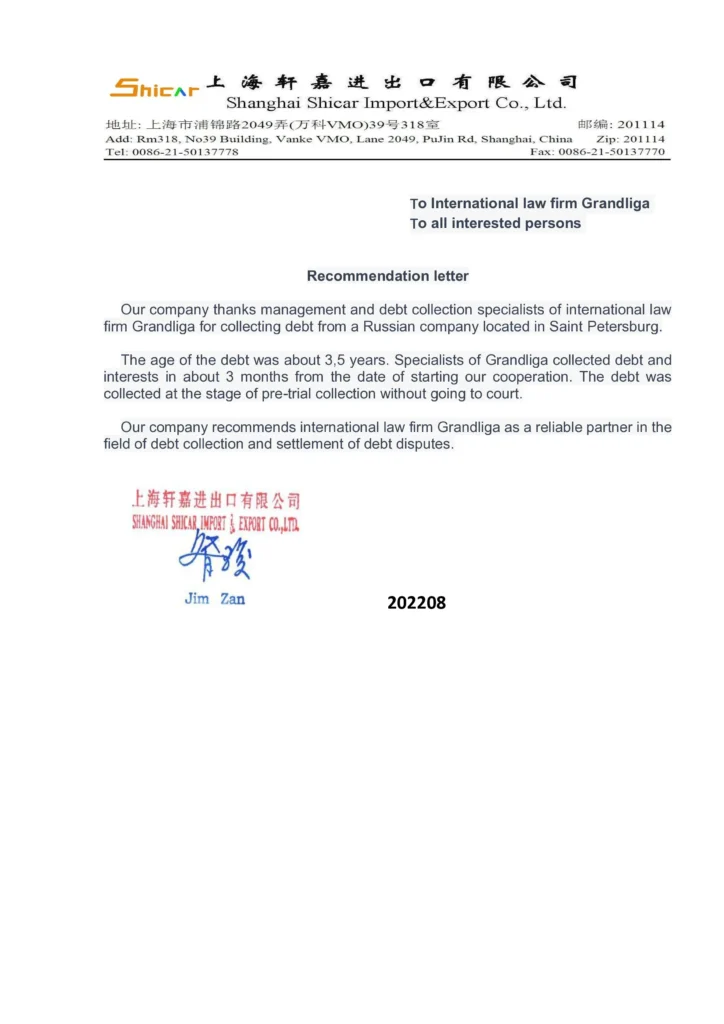
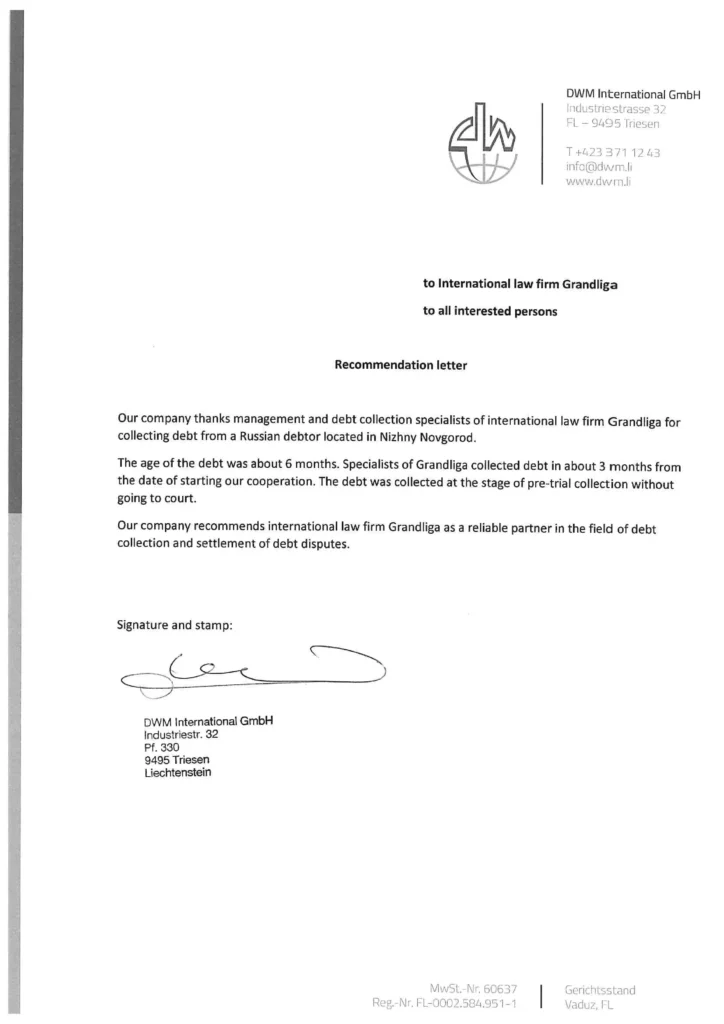
Grandliga supports creditors in debt collection in Ivory Coast at every stage of the case: debt and debtor analysis, amicable settlement, preparation of court proceedings, payment order, appeal support, recognition and enforcement of foreign judgments, protective measures, forced enforcement and collective proceedings. Our work is focused on structuring the case legally, choosing the appropriate recovery route and protecting the creditor’s rights through the enforcement stage.