
 Benin
Benin 
The debt collection procedure in Benin begins with an analysis of the debtor’s actual legal and financial position, business activity, places of operation, identifiable assets, bank accounts, claims against third parties, pending disputes, existing enforcement proceedings and possible objections to the debt. This analysis helps determine whether the claim should be pursued through amicable negotiations, ordinary court proceedings, an order for payment, enforcement measures or, where the debtor’s financial condition requires it, collective debt settlement proceedings.
In a Benin-related case, it is also important to verify where the obligation had to be performed, where the goods were delivered or services were provided, where the debtor’s registered office or operating establishment is located, and whether valid service of documents can be carried out. These factors may affect the competent court, the collection strategy and the real prospects of enforcement after a decision is obtained.
If the debtor continues business activity and the debt is sufficiently documented, an amicable stage may be initiated. This stage may include a payment demand, written communication with authorized persons, a proposed payment schedule, return of goods, set-off where the legal conditions are met, or another solution compatible with the contractual documents.
Communication with the debtor should be preserved in a way that makes it possible to prove its date, content, receipt and the debtor’s position. A written response, partial payment, promise to pay or acknowledgment of debt may be important for later stages, especially to prove the existence, amount and due status of the claim.
If the debtor does not pay, does not respond, disputes the debt without sufficient grounds, transfers assets, avoids service of documents or is already being pursued by other creditors, the creditor may initiate judicial debt collection in Benin and choose the procedure most suitable for the nature of the debt and the available evidence.
The Republic of Benin is a member of the Organization for the Harmonization of Business Law in Africa. In a commercial debt case in Benin, national law regulates, in particular, court jurisdiction, the filing of claims, time limits for appearance, certain remedies and the recognition of foreign court decisions. Common business law rules applicable in the member states regulate commercial obligations, simplified recovery procedures, enforcement measures and collective debt settlement proceedings.
Benin has a specific role within this legal system because several initial common rules were adopted in Cotonou. For this reason, the recovery of a commercial claim in Benin should be prepared not only on the basis of the contract, invoices and delivery or service documents, but also with regard to the interaction between Beninese procedural rules and the common business law rules applicable in the member states.
Before starting court proceedings, it is advisable to verify the applicable limitation period. For obligations arising in connection with trade between merchants or between merchants and non-merchants, the applicable period is five years, unless a shorter special period applies. This assessment depends on the type of debt, the status of the parties, the available documents, previous payments and any acknowledgment of the debt by the debtor.
The expiry of the limitation period may affect the outcome of the case when the debtor relies on it. An acknowledgment of debt, filing of a claim, application for an order for payment, payment demand or enforcement action may be relevant to the calculation of the period depending on the circumstances of the particular case.
Judicial debt collection in the Republic of Benin may be carried out through ordinary court proceedings or through an order for payment, depending on the nature of the case. The choice of procedure depends on the origin of the debt, the degree of dispute, the available evidence, the debtor’s residence or registered office, the amount claimed and the practical need to obtain a document suitable for enforcement quickly.
In commercial matters, the Cotonou Commercial Court may hear certain commercial disputes at first instance within the limits of its subject-matter and territorial jurisdiction. This jurisdiction is particularly relevant for the Littoral, Atlantique, Ouémé and Plateau areas. Before filing a claim, it is advisable to assess the debtor’s location, the place of performance of the obligation, the nature of the contract and the commercial nature of the dispute.
Ordinary court proceedings begin with a written application or statement of claim. If the claim meets the procedural requirements, the president of the court orders the parties to be summoned and the defendant to be served with the claim, the amount sought and the supporting documents. The claim should identify the parties, describe the facts, state the basis of the claim, specify the amount of the debt and include documents proving the existence, amount and due status of the debt.
The period between service of the summons or claim and the date fixed for appearance is eight days if the summoned party resides within the jurisdiction of the court hearing the case, fifteen days if the party resides in an adjacent jurisdiction, one month if the party is located in another part of the Republic of Benin, and two months if the party resides outside the territory of Benin. These periods are full time limits. In urgent cases, the president of the court may shorten them by order.
If the defendant is located abroad, the claimant must show that communication can be carried out securely and promptly. In proceedings before a court seated in the Republic of Benin, the periods for appearance, appeal, objection, review and legal challenge are increased by two months for persons residing abroad.
On the appointed date, the parties appear in person or through representatives. If the defendant fails to appear, a new summons may be ordered where service was not made personally. If the defendant fails to appear despite valid service, the court may examine the case on the merits on the basis of the available documents and arguments.
The court decides against the debtor only if the creditor’s claim is considered lawful, admissible and well-founded. If both parties appear, the court hears them and may decide the case if it considers the matter ready for judgment. If further clarification is required, the judge may organize the exchange of documents and arguments, hear witnesses, verify the authenticity of documents, order an expert examination or take other necessary procedural measures.
At the hearing on the merits, the court assesses the preparatory measures, the amount of the debt, its due status, the defendant’s objections and the final submissions of the parties. If the decision cannot be delivered immediately, delivery may be postponed for further consideration for a reasonable period, not exceeding two months.
An order for payment may be used when the claim is certain, capable of being calculated in money and due. This procedure is particularly suitable for contractual debts, obligations arising from commercial instruments or claims arising from checks where the funds were absent or insufficient.
The creditor files the application for an order for payment with the competent court of the debtor’s residence or actual place of stay, or, where there are several debtors, with the court of one of them. The application must identify the parties, state the amount claimed with a breakdown of its components, specify the basis of the debt and attach supporting documents. If the creditor is not domiciled in the state of the court seized, an address for service within the jurisdiction of that court must be provided.
If the application is well-founded, the president of the competent court or the appointed judge issues the order for payment within three days of the filing of the application. If the application is refused in whole or in part, the refusal must be reasoned. That refusal cannot be appealed within this procedure, but the creditor may bring the claim through ordinary court proceedings.
A certified copy of the application and the order for payment must be served on the debtor within three months from the date of the order. If service is not completed within that period, the order becomes ineffective. The service document must inform the debtor that there are ten days to pay the amount fixed or to lodge an objection within the same period, with any applicable increase for distance.
An objection is the ordinary remedy against an order for payment. The debtor must lodge it within ten days after service of the order. The party lodging the objection must notify the parties, the person responsible for enforcement and the court registry, and must summon the parties to a date not later than thirty days from the objection.
After the objection, the court appoints a judge to attempt conciliation. The appointed judge carries out that attempt within fifteen days of the appointment. If conciliation is reached, the record signed by the parties and the registry may receive enforceable effect and replace the order for payment. If conciliation fails, the court decides on the claim within two months from the first hearing. This decision has the effect of a judgment issued in adversarial proceedings, even if the debtor who lodged the objection does not appear.
If the debtor does not lodge an objection within the time limit or withdraws it, the creditor may request that the order for payment receive enforceable effect. This request must be made within two months after the expiry of the objection period or after the debtor’s withdrawal. If this period is missed, the order for payment becomes ineffective.
First instance decisions may be challenged by appeal within one month, unless a special rule provides otherwise. In non-contentious matters, the period is fifteen days. For decisions issued after an objection to an order for payment, the special appeal period is fifteen days. The appeal and the appeal period suspend enforcement unless provisional enforcement has been ordered.
A legal challenge before the highest court is intended to review whether the contested decision complies with the applicable legal rules. Where common business law rules applicable in the member states are involved, review may fall within the competence of the Common Court of Justice and Arbitration. Unless a special rule provides otherwise, the period for such a challenge is three months from the delivery of the decision; for decisions issued in the absence of a party, the period runs from service of the decision on the person or at the person’s residence.
If the creditor already has a foreign court decision, that decision must be recognized as enforceable in Benin before enforcement measures are used. The application is submitted to the president of the court of first instance of the place where enforcement is to be carried out. The file should include, among other documents, an authenticated copy of the decision, documents proving its service, a registry certificate confirming the absence of objection or appeal where applicable, and the summons or service documents for the party that did not appear.
Recognition of the foreign decision as enforceable allows it to be used for enforcement measures in Benin. The decision on recognition may be appealed, and the court of appeal decides within a period not exceeding three months from the time the case is brought before it.
After obtaining an enforceable judgment, an order for payment with enforceable effect, an enforceable settlement record or a foreign decision recognized as enforceable in Benin, the creditor may initiate compulsory enforcement against the debtor. Enforcement measures may target bank accounts, claims against third parties, movable property, real estate, securities, company rights or debtor’s property held by third parties.
Compulsory enforcement is carried out by the competent person responsible for enforcement. Where an enforceable title exists, that person may, under the conditions provided by law, request useful information about the debtor’s assets, address and, where applicable, employer from public authorities, public legal entities and credit information offices. Protective measures may also be used to preserve the future recovery of the debt.
Acts intended to preserve or recover claims may be carried out on paper or electronically. Electronic acts may perform the same function as paper documents where access, identification of origin, integrity of content and proof of receipt in the case of electronic service are ensured.
Where the debtor’s financial condition makes individual enforcement difficult, the creditor may request the opening of judicial reorganization or liquidation of assets against the debtor. In the Republic of Benin, these proceedings are governed by the common rules on collective debt settlement. The creditor may file such a request where the claim is certain, capable of being calculated in money and due. The application should state the nature and amount of the claim and identify the document on which it is based.
If the debtor cannot meet due debts with available assets, collective proceedings may organize the rights of creditors within a common framework. Judicial reorganization is aimed at continuing business activity where there is a serious possibility of recovery. Liquidation of assets applies where the debtor’s economic situation no longer allows business activity to continue.
If the debtor’s assets are insufficient to fully satisfy creditors’ claims, certain acts carried out during the suspect period may be declared unenforceable against the body of creditors. This period begins on the date of cessation of payments and ends on the date of the decision opening judicial reorganization or liquidation of assets.
These acts may include gratuitous transfers of movable or immovable property, contracts in which the debtor’s obligations clearly exceed those of the other party, payment of debts not yet due, certain payments of due debts made by abnormal means, real security granted for earlier debts and certain protective registrations.
Other acts may also be declared unenforceable against the body of creditors where they harm that body, including gratuitous acts carried out within six months before the suspect period, transactions for value concluded with a person who knew of the debtor’s cessation of payments, or voluntary payments of due debts received by a person who knew of that situation.
Unenforceability may lead to restitution of the asset, repayment of its value or return of the payment into the collective proceedings. This may increase the assets available to creditors and help cover the costs of the proceedings.
Where judicial reorganization or liquidation of assets of a legal entity reveals insufficient assets, a management fault that contributed to that insufficiency may give rise to management liability. Collective proceedings may also be extended personally to a manager who used the legal entity to conceal personal acts, treated company property or credit as personal property, or abusively continued loss-making activity in personal interests.
For this reason, collective proceedings may be an independent recovery route, especially where the debtor does not have sufficient assets immediately available for seizure, several creditors are pursuing the same debtor, or previous transactions reduced the assets available to creditors.
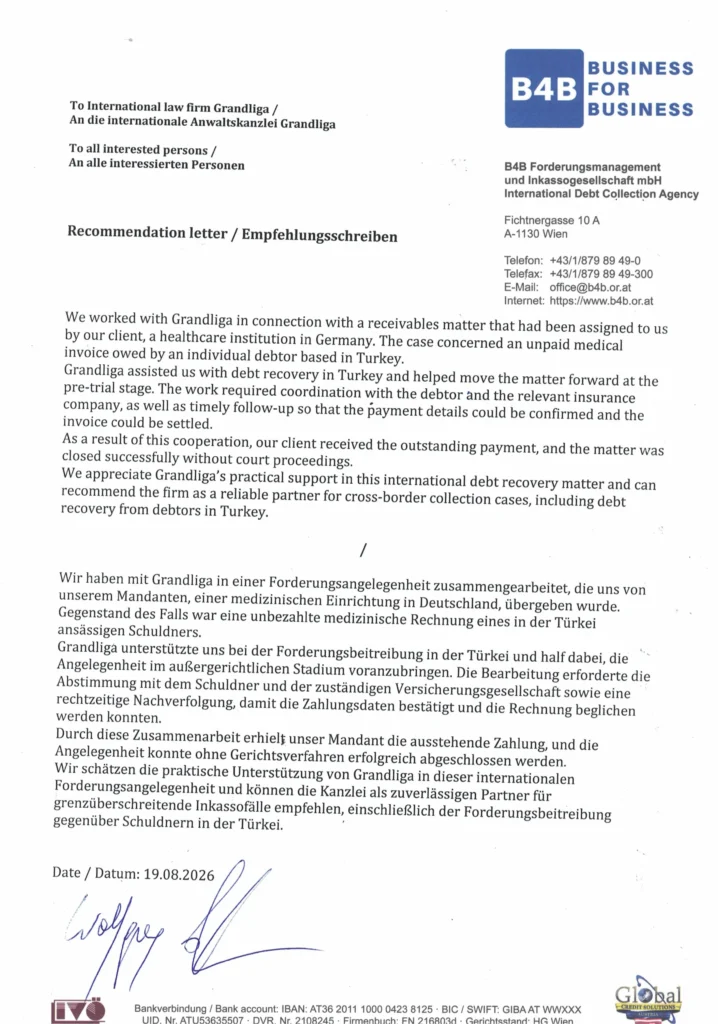
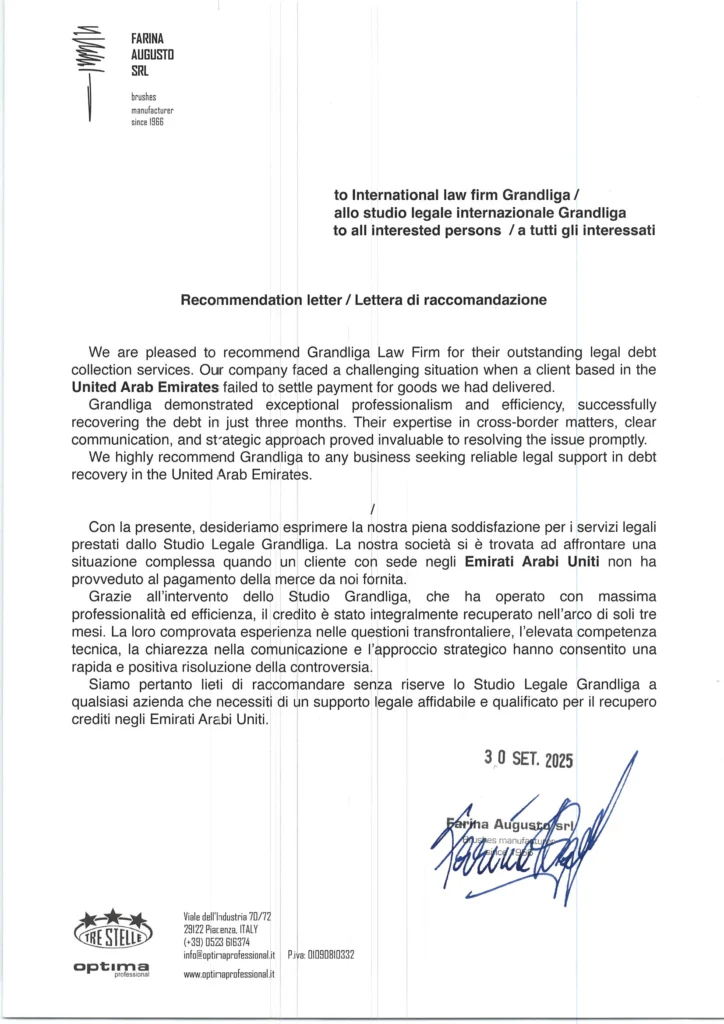
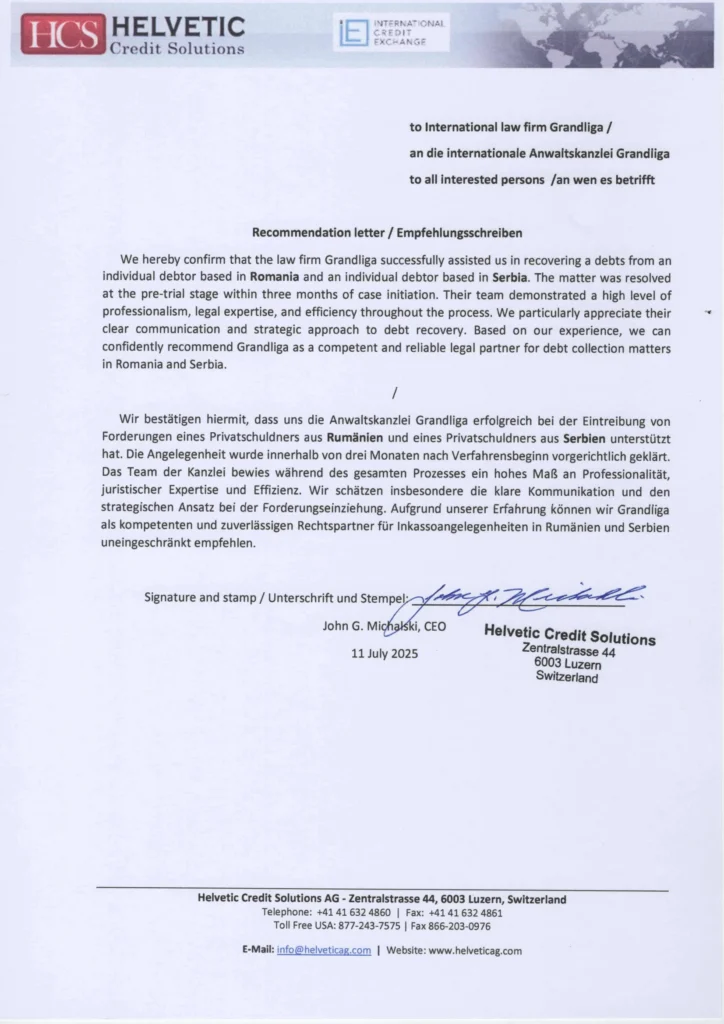
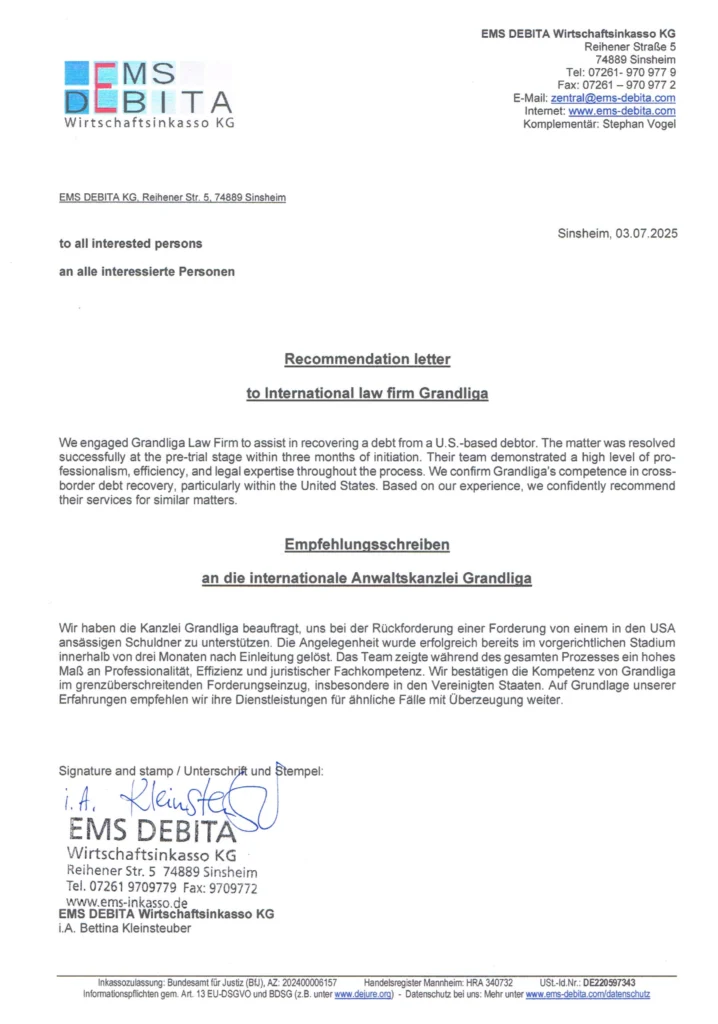
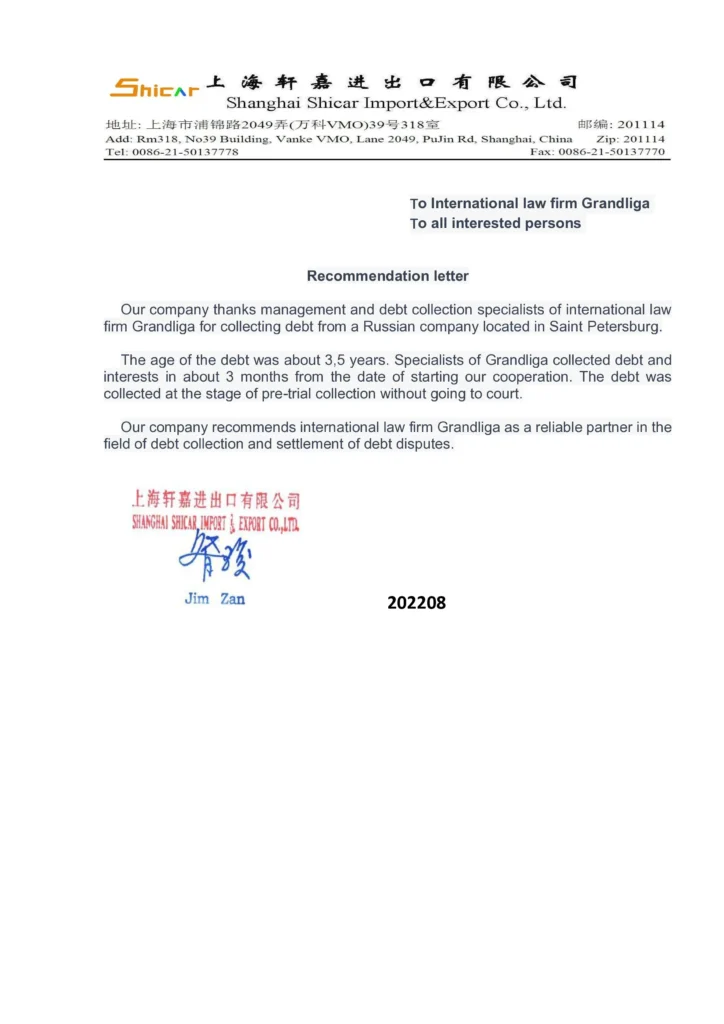
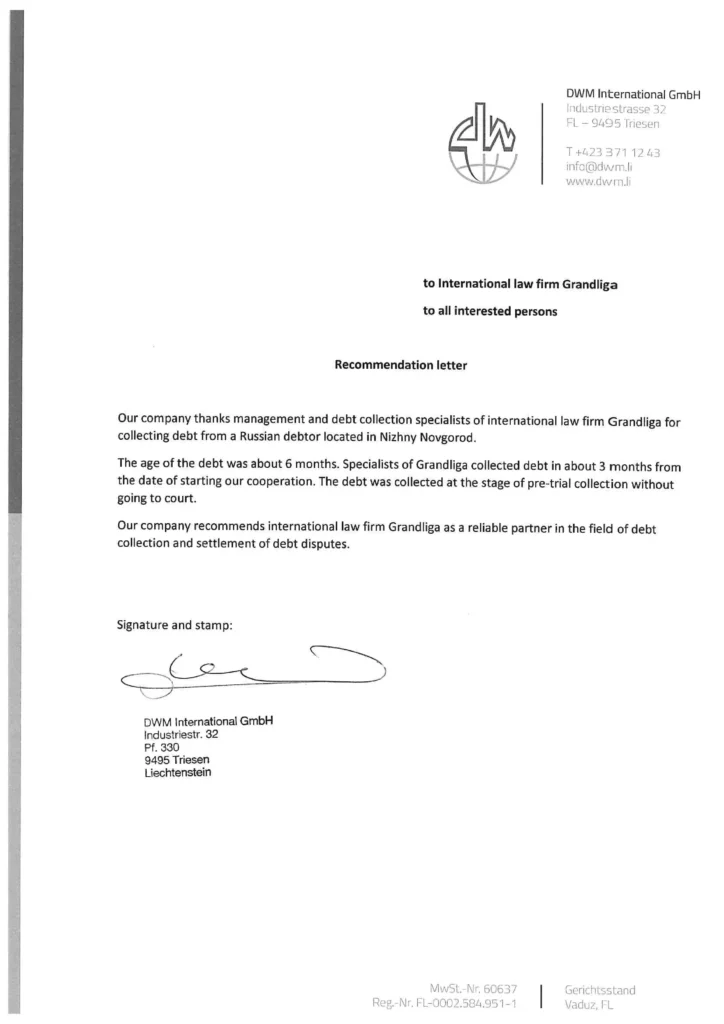
If the debtor does not pay invoices, delays payment, disputes the debt without sufficient grounds or avoids communication, Grandliga can assist you with debt collection in Benin. We analyze contracts, invoices, delivery or service documents, correspondence and payment history, assess the debtor’s situation and determine the most suitable route for the specific case. This approach makes it possible to structure the claim according to the available documents, the debtor’s conduct and the real recovery possibilities in Benin.