Let's discuss your case
We will analyze and give recommendations
The process of debt collection in Jamaica should begin with a legal and factual assessment of the debtor, the basis of the claim and the documents available to prove the debt. At this stage, the creditor should identify whether the debtor is an individual, a registered business name, a Jamaican company, an overseas company registered in Jamaica, a guarantor or another liable person, and whether the obligation is based on a contract, invoice, loan, delivery, services, settlement agreement, judgment or another enforceable source.
For corporate debtors, practical checks may include a company search through the Companies Office of Jamaica and the Jamaica Beneficial Ownership Registry. These checks can help confirm the entity name, registration number, type of entity, status, officers, directors or other persons connected with the debtor. The assessment should also cover current litigation, enforcement proceedings, insolvency indicators, available assets, payment history, correspondence, acknowledgments of debt and the debtor’s likely objections. The result of this legal and factual assessment determines whether the creditor should start with negotiations, file a claim in the Parish Court, bring proceedings in the Supreme Court, register or enforce a foreign judgment, or consider insolvency measures.
If the debtor has no current litigation or outstanding judgments for debt collection and continues to carry on business, the creditor may first use the out-of-court debt collection stage. This route is most useful where the debtor can still be contacted, the debt is supported by documents and there is a realistic possibility of voluntary payment, a repayment schedule, return of goods, set-off, transfer of the debt to a third party or another settlement solution.
This stage should begin with a written demand or notice sent through an appropriate channel, such as post, email, telephone communication or instant messaging, depending on the available contact details and the nature of the debt. Communication with the debtor should remain structured, proportionate and documented: the creditor should record delivery of the demand, the debtor’s replies, payment promises, objections, proposals for instalments, partial payments and any statement that may confirm the existence or amount of the debt.
The purpose of this stage is not informal pressure, but a documented attempt to obtain payment, identify the decision makers, understand whether the debt is genuinely disputed and preserve evidence for further court or enforcement action. The average working period for informal recovery may be planned for up to 60 days, except where a payment plan or another settlement timetable has been agreed. If negotiations do not produce payment, the debtor ignores the demand, assets may be dissipated, insolvency risks arise or the limitation period requires faster action, the creditor should proceed to judicial debt collection or another formal recovery route.
Before initiating judicial debt collection, the creditor should assess the applicable limitation period. For many simple contract debts in Jamaica, the practical starting point is a six-year limitation period from the date when the cause of action accrued. This period is especially relevant for claims based on unpaid invoices, loans, services, supplies or other ordinary contractual obligations, while obligations made by deed, specialty or another special legal instrument may require a different limitation analysis.
A written acknowledgment of the debt signed by the debtor or an authorized agent, as well as a relevant part payment of the debt or interest, may cause time to run afresh from the date of acknowledgment or payment. For court purposes, the creditor should preserve the written acknowledgment, payment records, account statements and correspondence, because the facts of acknowledgment or part payment may need to be expressly relied on when the debtor raises limitation as a defence.
Jamaican law allows judicial debt collection through the Parish Courts and the Supreme Court, depending on the amount claimed, the nature of the dispute and the procedural route available for the case. The Parish Courts are courts of first instance for many civil claims, including common law claims in contract and tort within their monetary jurisdiction. The current limit for such common law claims is J$1,000,000. Claims above that level, more complex commercial claims or claims requiring wider procedural powers are generally brought in the Supreme Court.
In a Parish Court debt claim, the process usually begins with filing the claim and issuing a summons for the defendant. Service of the summons is a critical stage because the court may proceed only where there is proper proof of service. The confirmed service periods depend on the type of summons: an Ordinary Summons or White Summons must be served at least eight clear days before the court date, a Judgment Summons must be personally served at least ten clear days before the court date, and a Pink Summons must be personally served at least twelve clear days before the court date. Clear days do not include the date of service or the date of court.
If the defendant appears and disputes the claim, the Parish Court will hear the parties, examine the evidence and decide whether the debt is proved. If the defendant fails to appear or respond in accordance with the summons and the creditor proves proper service, the court may proceed without the defendant’s participation. Where both parties attend, the creditor should be ready to prove the debt through the contract, invoices, delivery documents, account statements, correspondence, admissions, payment history and witness evidence where required.
The decision of the Parish Court may be appealed to the Court of Appeal. A party may give verbal notice of appeal at the time the judgment is delivered or may file written notice of appeal in the Parish Court within 14 days from the date of judgment. The appeal route should be considered immediately after judgment, especially where enforcement may be affected by a pending appeal or an application for a stay.
In the Supreme Court, debt proceedings are not simply a written collection procedure. A claim is commenced by the appropriate claim form and supporting particulars, and the documents must be served on the defendant. As a general rule, a defendant who wishes to contest the claim or the court’s jurisdiction must file an acknowledgment of service within 14 days after service of the claim form, unless a defence is filed within the same period. The general period for filing a defence is 42 days after service of the claim form or, where particulars of claim are served later, 42 days after service of the particulars of claim.
If the defendant does not file an acknowledgment of service or does not file a defence, the creditor may be able to seek a default judgment where the Civil Procedure Rules allow it. If the defendant files a defence but has no real prospect of successfully defending the claim, the creditor may consider an application for summary judgment. If the claim is genuinely disputed, the case may proceed through case management, evidence, hearing and judgment according to the court’s directions.
An interested party may appeal a decision of the Supreme Court to the Court of Appeal within the applicable civil appeal period. For interlocutory appeals where permission is not required, the notice of appeal must generally be filed and served within 14 days from the date of the decision. Where permission to appeal is required, the period is generally 14 days from the date when permission was granted. In other civil appeals, the general period is 42 days from the date of the order or judgment being appealed.
An appeal does not automatically suspend the effect of the judgment. If enforcement should be delayed while the appeal is pending, the appellant must seek a stay of execution. After the Court of Appeal gives its decision, a further appeal to the Judicial Committee of the Privy Council may be available only in the circumstances permitted by the applicable appeal rules and leave requirements.
For an international creditor, recognition and enforcement of foreign judgments in Jamaica should be assessed separately from an ordinary claim for the original debt. If the creditor already has a final and conclusive foreign money judgment, Jamaica may allow enforcement either through statutory registration where the relevant reciprocal regime applies or through a common law action where statutory registration is not available.
Under the statutory route, the application is governed by the applicable reciprocal enforcement legislation and CPR Part 72. The court order for registration must state the period within which the judgment debtor may apply to set aside registration, and execution on the registered judgment cannot issue until that period has expired or any set-aside application has been determined. Proper notice of registration and evidence of service are therefore important before enforcement begins.
Where the statutory regime is not available, a foreign money judgment may be pursued through a common law action on the judgment debt. In that route, the foreign judgment is treated as creating an obligation to pay, but the creditor must still bring proceedings in Jamaica and establish the requirements for common law enforcement, including that the judgment is final and conclusive, for a money sum, and enforceable against the judgment debtor within the court’s jurisdiction.
After a Jamaican judgment, registered foreign judgment or enforceable order can be enforced, the creditor must initiate enforcement proceedings; the judgment itself does not automatically recover the money. Under the Civil Procedure Rules, money judgments may be enforced by an order for seizure and sale of goods, a charging order, an order for attachment of debts, the appointment of a receiver, a Judgment Summons or an order for sale of land. The choice of method depends on whether the debtor has bank balances, receivables, movable assets, land, income, business assets or other property that can realistically be reached.
For writ-based enforcement, a writ of execution is valid for 12 months from the date of issue. After that period, the judgment creditor may not take further steps under the writ unless the court renews it, and a renewal may be granted for a period of not more than six months. If six years have passed since the judgment was entered, permission may be required before a writ of execution can be issued.
If the debtor has signs of insolvency, the creditor may consider insolvency proceedings instead of, or in addition to, ordinary debt litigation and enforcement. Under the Jamaican Insolvency Act, an insolvent person includes a person who resides, carries on business or has property in Jamaica, whose liabilities to creditors provable as claims amount to at least J$300,000 and who is unable to meet obligations as they generally become due, has ceased paying current obligations in the ordinary course of business, or whose property is insufficient to enable payment of all obligations due and accruing due. A creditor’s application for a receiving order must state that the debt or debts owing to the applicant creditor or creditors amount in the aggregate to not less than J$300,000 and that the debtor committed an act of bankruptcy within six months immediately preceding the filing of the application.
The signs of bankruptcy relevant to debt recovery include fraudulent preference, conveyance, gift, delivery or transfer of property, departure from Jamaica or remaining outside Jamaica with intent to defeat or delay creditors, execution remaining unsatisfied, a written admission of inability to pay debts, notice to creditors that payment has been suspended or is about to be suspended, default in performance of a proposal, or generally ceasing to meet liabilities as they become due. Once insolvency proposal or bankruptcy mechanisms are triggered, ordinary recovery actions and enforcement may be stayed or redirected through the insolvency process, subject to the position of secured creditors and the specific order or procedure involved.
In insolvency proceedings, the trustee may challenge fraudulent preferences and other reviewable transactions. A conveyance, transfer, charge, payment, obligation or judicial proceeding that gives one creditor a preference over others within the relevant pre-bankruptcy period may be treated as fraudulent and void against the trustee. Where the transaction involves a related person, the relevant period may be longer. If a reviewable transaction was made for consideration conspicuously above or below fair market value, the court may give judgment in favour of the trustee against the other party or persons privy to the transaction for the difference between the actual consideration and fair market value.
The Insolvency Act also preserves important consequences for corporate debtors. Where a bankrupt corporation paid a dividend or redeemed or purchased shares within the relevant period and the transaction occurred when the corporation was insolvent or rendered it insolvent, the court may give judgment against the directors jointly and severally if the statutory conditions are met. In some cases, the court may also give judgment against a related shareholder or another person who received value from the transaction. For a creditor, this means that insolvency analysis should include not only the debtor’s assets, but also recent transfers, preferences, payments to related parties, dividends, share redemptions, corporate records and the conduct of persons controlling the debtor.
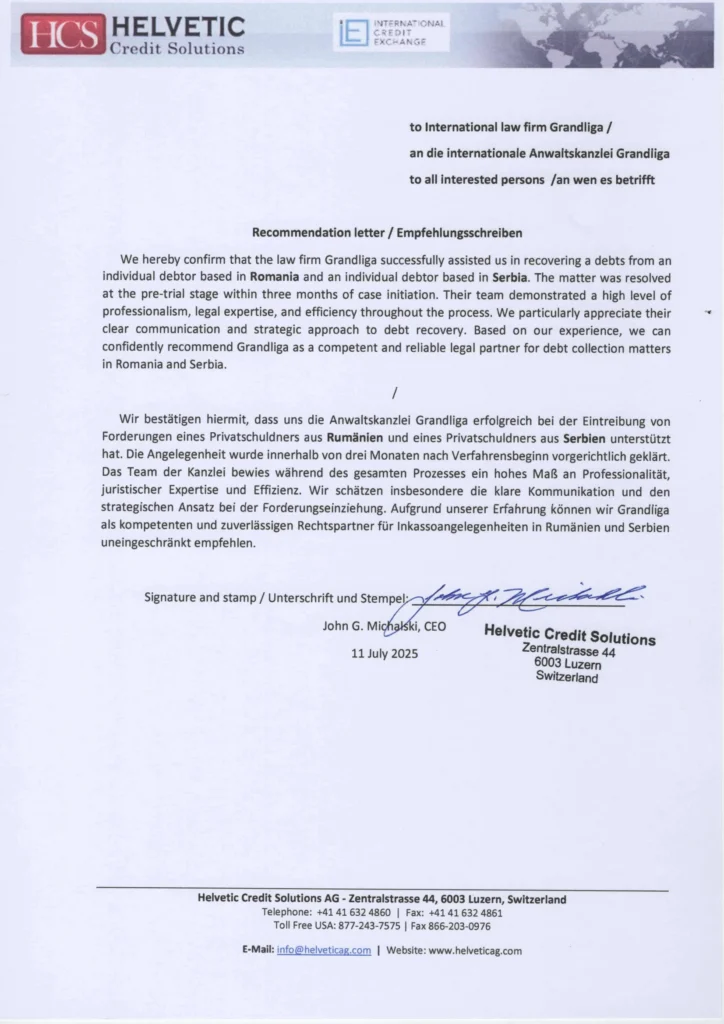
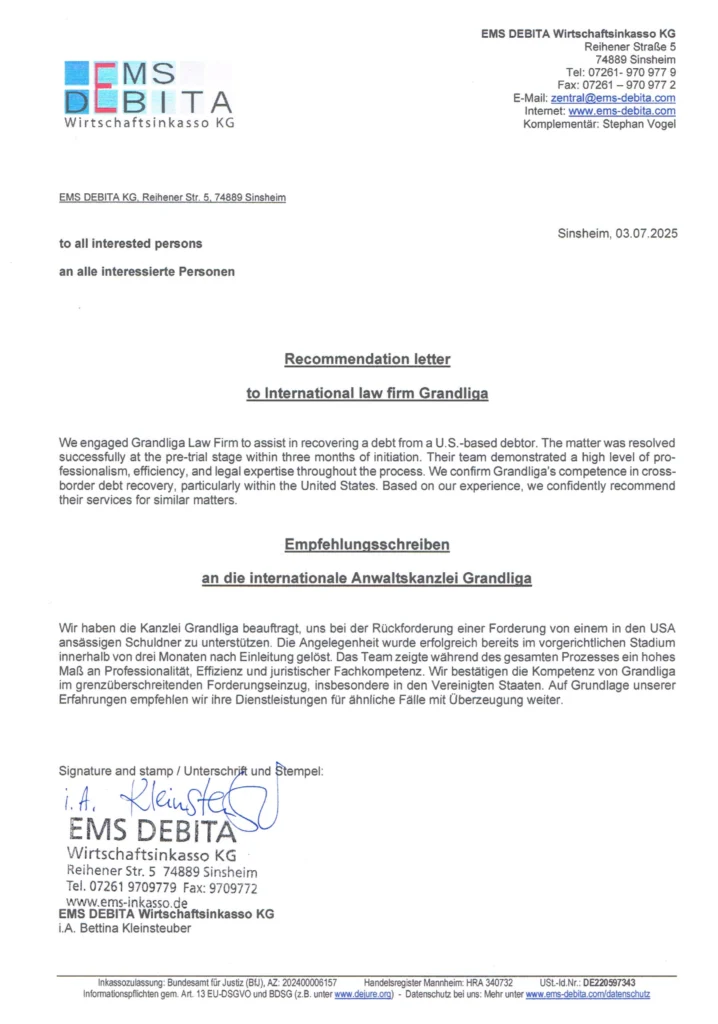
If you need support with international debt collection in Jamaica, Grandliga can assist at all stages of the recovery process: debtor and document analysis, pre-court communication, preparation of a claim strategy, work with local counsel, court proceedings, recognition or enforcement of a foreign judgment, enforcement against assets and insolvency-related recovery options. The appropriate route depends on the documents, debtor status, limitation period, assets and procedural risks, so each case should be assessed before recovery steps are started.
# DEBT COLLECTION AGENCY JAMAICA
 3044
3044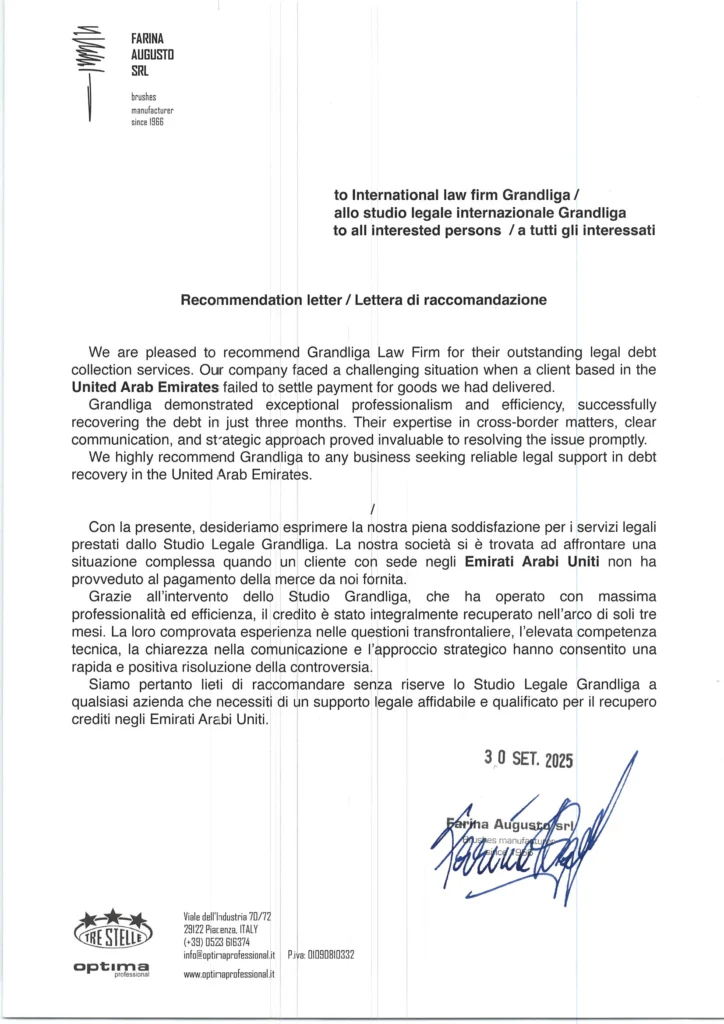

We will analyze and give recommendations